
5150 Meaning: Exploring the Origins, Implications, and Cultural Significance
By Andrew Thornton
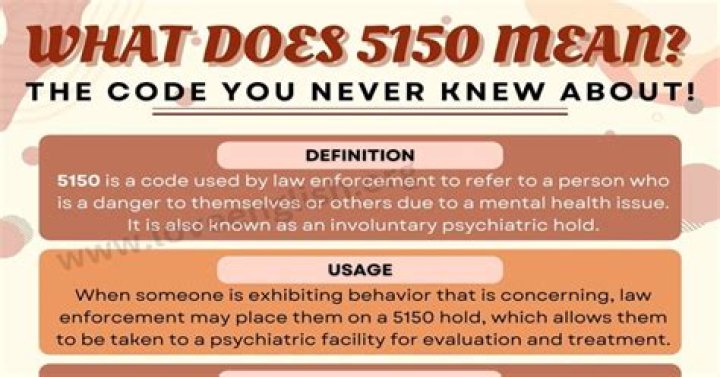
The term "5150" has gained significant recognition in popular culture, but its meaning goes far beyond just a random number. It represents a powerful symbol tied to mental health, law enforcement, and even music. Understanding its origins, applications, and cultural impact is essential for anyone seeking clarity about this intriguing term.
At its core, 5150 meaning is rooted in California's Welfare and Institutions Code, which allows for involuntary psychiatric holds. This article will delve into the history, applications, and cultural relevance of 5150, ensuring you gain a comprehensive understanding of its significance.
As we explore the various dimensions of this term, we'll uncover its role in mental health care, its portrayal in media, and its widespread adoption in modern society. By the end of this article, you'll have a well-rounded perspective on why 5150 is more than just a number.
The Origin of 5150 Meaning
The term "5150" originates from California's Welfare and Institutions Code, specifically Section 5150. Enacted in 1967 as part of the Lanterman-Petris-Short Act, this code allows law enforcement officers and designated mental health professionals to place individuals on involuntary psychiatric holds if they pose a danger to themselves or others.
Historical Background
Before the implementation of Section 5150, mental health care in the United States was largely institutionalized, with limited options for outpatient treatment. The introduction of this code marked a significant shift toward more humane and community-based care.
Key Points:
- Section 5150 was designed to protect individuals and the public from harm caused by mental health crises.
- It provides a legal framework for short-term involuntary holds, typically lasting up to 72 hours.
5150 in Law Enforcement
Law enforcement officers play a crucial role in the implementation of 5150 holds. When an individual exhibits signs of severe mental distress or poses a threat, officers can initiate the process by contacting mental health professionals or transporting the person to a designated facility.
Challenges Faced by Officers
While the 5150 code is a valuable tool for addressing mental health crises, it also presents challenges for law enforcement. Officers must balance public safety with the rights of individuals, ensuring that the use of 5150 is justified and appropriate.
Data from the National Alliance on Mental Illness (NAMI) shows that approximately 2 million people with serious mental illnesses are booked into jails annually, highlighting the intersection of mental health and law enforcement.
Impact on Mental Health Care
The implementation of 5150 has had a profound impact on mental health care systems. By providing a clear legal framework for involuntary holds, it ensures that individuals in crisis receive timely intervention and care.
Benefits and Limitations
While 5150 offers a critical safety net for those in need, it also faces criticism for potential misuse or over-reliance. Mental health professionals emphasize the importance of integrating 5150 with broader treatment plans to address long-term needs.
Key Benefits:
- Immediate intervention during mental health crises.
- Protection for both the individual and the community.
Limitations:
- Potential stigma associated with involuntary holds.
- Short-term nature of the hold, requiring follow-up care.
5150 in Music and Entertainment
5150 has transcended its legal origins to become a cultural phenomenon, particularly in the world of music. Van Halen's fifth studio album, titled "5150," brought the term into mainstream consciousness, symbolizing rebellion and breaking free from constraints.
Cultural Resonance
The album's success popularized the term, associating it with themes of freedom and self-expression. This cultural adoption highlights the dual nature of 5150—both a legal mechanism and a symbol of personal empowerment.
Van Halen's Influence:
- Released in 1986, "5150" became the band's first No. 1 album on the Billboard charts.
- The album's title track further cemented the term's place in popular culture.
Cultural Significance of 5150
Beyond its legal and musical contexts, 5150 holds cultural significance as a symbol of mental health awareness and advocacy. Its prominence in media and entertainment has helped destigmatize discussions around mental health crises.
Public Perception
As society becomes more informed about mental health issues, the perception of 5150 evolves. It serves as a reminder of the importance of accessible, compassionate care for those in need.
Statistics from the World Health Organization (WHO) indicate that 1 in 4 people globally will experience a mental health disorder at some point in their lives, underscoring the relevance of 5150 in modern society.
Common Misconceptions About 5150
Despite its widespread use, 5150 is often misunderstood. Misconceptions about its purpose and application can lead to confusion or mistrust among the public.
Clarifying the Facts
Some common misconceptions include:
- Belief that 5150 is only used for violent individuals.
- Assumption that it results in long-term commitment without consent.
Education and awareness are key to dispelling these myths and promoting a more accurate understanding of 5150's role in mental health care.
Statistical Insights on 5150 Cases
Data from mental health facilities and law enforcement agencies provide valuable insights into the prevalence and effectiveness of 5150 holds. Understanding these statistics helps inform policy decisions and improve care systems.
Key Findings
According to the California Department of Health Care Services:
- Over 200,000 individuals were placed on 5150 holds in California in 2021.
- The majority of cases involved individuals with severe mental illnesses such as schizophrenia or bipolar disorder.
These figures emphasize the need for robust mental health infrastructure to support those affected by 5150 holds.
The Legal Process Behind 5150 Holds
The process of initiating and executing a 5150 hold involves several steps, ensuring that the rights of individuals are protected while addressing immediate safety concerns.
Steps in the Process
- Assessment by a qualified mental health professional or law enforcement officer.
- Transportation to a designated psychiatric facility for evaluation.
- Review and determination of the need for extended care beyond the initial 72-hour hold.
Legal safeguards ensure that 5150 holds are implemented fairly and transparently, with opportunities for appeal if necessary.
Building a Support System for 5150 Patients
Effective mental health care extends beyond the initial 5150 hold. Creating a comprehensive support system is essential for long-term recovery and well-being.
Components of a Support System
- Ongoing therapy and counseling services.
- Access to medication management and psychiatric care.
- Community resources and peer support networks.
By addressing both immediate and long-term needs, support systems can significantly improve outcomes for individuals affected by 5150 holds.
Future Direction of 5150 Policies
As mental health awareness continues to grow, there is increasing focus on refining and expanding 5150 policies to better meet the needs of individuals and communities.
Innovations in Mental Health Care
Potential advancements include:
- Enhanced training for law enforcement and mental health professionals.
- Increased funding for mental health facilities and programs.
- Integration of technology for remote monitoring and support.
By embracing these innovations, policymakers can ensure that 5150 remains a vital tool in the ongoing effort to improve mental health care.
Conclusion
In conclusion, the 5150 meaning extends far beyond its legal origins, encompassing a wide range of implications for mental health care, law enforcement, and cultural awareness. From its role in crisis intervention to its portrayal in music and media, 5150 represents a critical component of modern society's approach to mental health.
We invite you to share your thoughts and experiences in the comments below. Additionally, consider exploring other articles on our site for more insights into mental health and related topics. Together, we can continue the conversation and work toward a more informed and compassionate future.


