
Brown Bear Versus Grizzly: Unveiling the Key Differences and Similarities
By Andrew Thornton
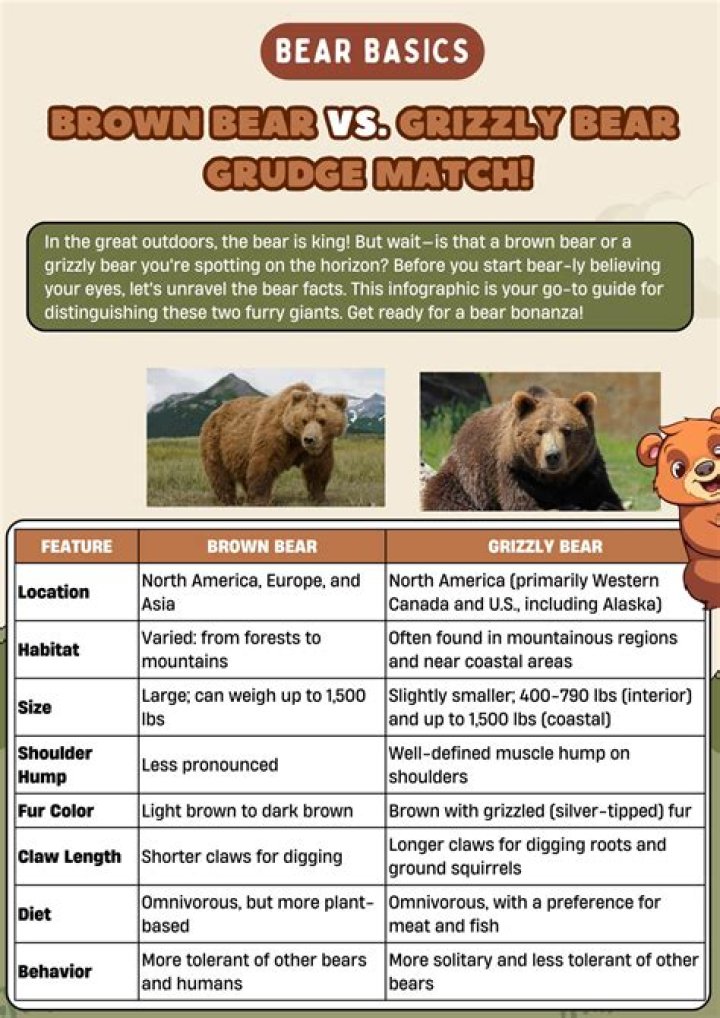
When it comes to discussing the world of bears, two names often dominate the conversation: brown bears and grizzlies. These majestic creatures are closely related, yet they possess distinct characteristics that set them apart. Understanding the differences and similarities between brown bears and grizzlies is essential for anyone fascinated by wildlife or simply curious about nature's wonders.
Brown bears and grizzly bears are not entirely different species but rather variations of the same Ursus arctos family. Despite their shared ancestry, they exhibit unique traits depending on their habitat, behavior, and evolutionary adaptations. This article will delve into their distinctions and overlapping features, helping you gain a comprehensive understanding of these powerful animals.
Whether you're a wildlife enthusiast, a student of biology, or just someone eager to learn more about nature, this guide will provide you with detailed insights into the brown bear versus grizzly debate. Let's explore their physical attributes, habitats, behaviors, and the role they play in the ecosystem.
Introduction to Brown Bears
General Overview of Brown Bears
Brown bears (Ursus arctos) are one of the largest land predators in the world. Found across North America, Europe, and Asia, brown bears have adapted to a wide range of environments, from dense forests to open tundra. Their impressive size and strength make them a symbol of power and resilience in the wild.
These bears can weigh between 300 to 1,500 pounds, with males typically larger than females. Their coat color varies from light blonde to dark brown, depending on their geographical location. Brown bears are known for their muscular build, long claws, and a distinctive shoulder hump, which is a result of powerful muscles used for digging and foraging.
Grizzly Bear Overview
What Makes Grizzlies Unique?
Grizzly bears (Ursus arctos horribilis) are a subspecies of brown bears primarily found in North America. While they share many traits with brown bears, grizzlies have specific characteristics that set them apart. For instance, their coat often has silver-tipped hairs, giving them a "grizzled" appearance, hence the name.
Grizzlies are highly adaptable and can thrive in diverse habitats, including mountains, meadows, and forests. They are opportunistic omnivores, consuming everything from berries and fish to small mammals. Despite their imposing size, grizzlies are incredibly fast and can reach speeds of up to 35 miles per hour.
Physical Comparisons: Brown Bear Versus Grizzly
Key Physical Differences
While brown bears and grizzlies are closely related, there are notable physical differences between them:
- Size: Brown bears tend to be larger, especially those living near coastal areas where they feed on salmon.
- Shoulder Hump: Both species have a prominent shoulder hump, but it is more pronounced in grizzlies due to their digging habits.
- Claws: Grizzlies have longer and more curved claws compared to brown bears, aiding in digging for roots and insects.
- Facial Structure: Grizzlies have a more concave facial profile, while brown bears have a straighter face.
These physical distinctions are crucial for identifying the two species in the wild.
Habitat Differences
Where Do They Live?
Brown bears and grizzlies inhabit different regions, although their ranges sometimes overlap. Brown bears are found in various parts of the world, including:
- North America: Alaska, Canada, and parts of the contiguous United States.
- Europe: Scandinavia, Russia, and Eastern Europe.
- Asia: Siberia, the Himalayas, and parts of the Middle East.
In contrast, grizzly bears are predominantly found in North America, particularly in Alaska, western Canada, and the northwestern United States. Their preference for remote, rugged terrains helps them avoid human contact.
Diet and Feeding Habits
What Do They Eat?
Both brown bears and grizzlies are omnivores, meaning they consume both plants and animals. However, their diets vary depending on their location and season:
- Brown Bears: Coastal brown bears in Alaska rely heavily on salmon during the summer months, while inland populations feed on berries, nuts, and small mammals.
- Grizzly Bears: Grizzlies in North America have a diverse diet that includes roots, insects, fish, and carrion. They are also known to hunt large prey like elk and moose.
Interestingly, both species store fat during the summer and autumn to survive the harsh winter months in hibernation.
Behavioral Characteristics
How Do They Act?
Brown bears and grizzlies exhibit fascinating behaviors that reflect their adaptability and intelligence:
- Social Structure: Both species are generally solitary, except during mating season or when mothers care for their cubs.
- Communication: They use vocalizations, body language, and scent marking to communicate with each other.
- Intelligence: Bears are highly intelligent and have been observed using tools and solving problems in the wild.
Understanding their behaviors helps researchers and conservationists develop effective strategies to protect these animals.
Conservation Status
Threats and Protection Efforts
Despite their resilience, brown bears and grizzlies face numerous threats, including habitat loss, climate change, and human-wildlife conflict. Conservation efforts are underway to protect these species:
- Protected Areas: National parks and wildlife reserves provide safe havens for bears to thrive.
- Research and Monitoring: Scientists study bear populations to better understand their needs and challenges.
- Public Awareness: Educating communities about coexisting with bears is crucial for their long-term survival.
Efforts like these are vital for ensuring the survival of brown bears and grizzlies for future generations.
Interaction with Humans
Living in Harmony
Human-bear interactions can be both positive and negative. While bears play a vital role in ecosystems, they can pose risks to human safety if not properly managed. Tips for safe encounters include:
- Keep Distance: Always maintain a safe distance from bears in the wild.
- Use Bear Spray: Carry bear spray as a deterrent in case of a close encounter.
- Dispose of Waste Properly: Avoid leaving food or garbage that might attract bears.
By following these guidelines, humans can minimize conflicts and promote peaceful coexistence with bears.
Ecological Importance
Why Are They Essential?
Brown bears and grizzlies play a crucial role in maintaining healthy ecosystems:
- Seed Dispersal: By consuming fruits and berries, bears help spread plant seeds across their territories.
- Predator Control: As apex predators, they regulate populations of smaller animals.
- Nutrient Cycling: Bears contribute to nutrient cycling by bringing marine resources like salmon into terrestrial ecosystems.
Protecting these animals is not only about preserving biodiversity but also about maintaining the balance of nature.
Conclusion and Future Perspectives
In conclusion, the brown bear versus grizzly debate highlights the fascinating diversity within the Ursus arctos family. While they share many similarities, their distinct characteristics make them unique and captivating creatures. Understanding their physical traits, habitats, behaviors, and ecological roles is essential for their conservation and coexistence with humans.
We invite you to share your thoughts and experiences in the comments below. Do you have any questions or insights about brown bears and grizzlies? Additionally, feel free to explore our other articles on wildlife and nature. Together, we can make a difference in protecting these magnificent animals and the ecosystems they inhabit.
Data Sources: National Geographic, International Union for Conservation of Nature (IUCN), and U.S. Fish and Wildlife Service.