
Centrifugal vs Centripetal: A Comprehensive Guide to Understanding the Key Differences and Applications
By Michael Gray
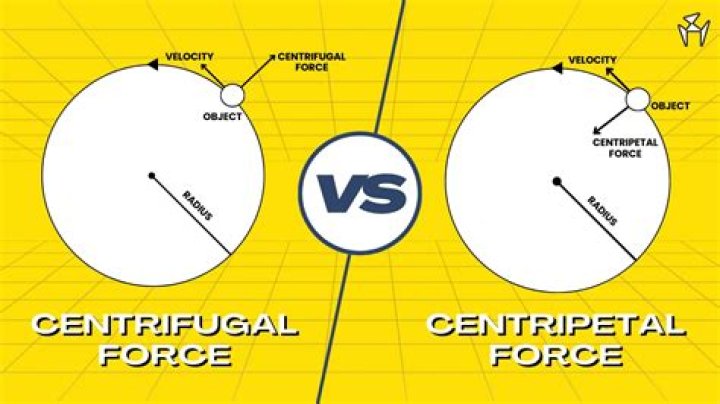
Centrifugal and centripetal forces are fundamental concepts in physics that play a crucial role in understanding motion and mechanics. These forces govern the behavior of objects in circular motion, from the spinning of a merry-go-round to the orbit of planets around the sun. Whether you're a student, an engineer, or simply someone curious about the mechanics of motion, understanding the distinction between centrifugal and centripetal forces is essential.
Both forces are interconnected yet distinct in their roles. While centripetal force acts as the inward pull required to keep an object moving in a circular path, centrifugal force is often perceived as the outward force experienced by objects in rotation. These concepts are not only theoretical but have practical applications in engineering, automotive design, and even everyday life.
This article delves into the intricacies of centrifugal vs centripetal forces, exploring their definitions, differences, applications, and the science behind them. By the end of this guide, you'll have a clear understanding of how these forces shape the world around us.
Defining Centrifugal and Centripetal Forces
Centrifugal and centripetal forces are often misunderstood because they describe related but opposite effects in circular motion. Let's break down their definitions:
What is Centripetal Force?
Centripetal force is the inward force that causes an object to follow a curved or circular path. It acts perpendicular to the object's velocity and is directed toward the center of the circle. The word "centripetal" comes from Latin, meaning "center-seeking." Without centripetal force, an object in motion would travel in a straight line due to inertia.
What is Centrifugal Force?
Centrifugal force, on the other hand, is the apparent outward force experienced by objects in rotation. It is not a real force but rather an effect caused by inertia. In a rotating reference frame, objects appear to be pushed outward, away from the center of rotation. This phenomenon is often referred to as a "fictitious force" in physics.
Understanding these definitions is the first step toward grasping the mechanics of circular motion.
Key Differences Between Centrifugal and Centripetal Forces
While both forces relate to circular motion, they differ in several critical ways:
- Direction: Centripetal force always acts toward the center of the circle, while centrifugal force appears to push objects outward.
- Frame of Reference: Centripetal force is observed in an inertial reference frame, whereas centrifugal force is experienced in a rotating, non-inertial frame.
- Existence: Centripetal force is a real force, while centrifugal force is a fictitious force that arises due to inertia.
These distinctions highlight the importance of considering the context in which these forces are applied.
The Scientific Principles Behind These Forces
The principles governing centrifugal vs centripetal forces are rooted in Newton's laws of motion and the concept of inertia:
Newton's First Law of Motion
According to Newton's first law, an object in motion will continue in a straight line unless acted upon by an external force. In circular motion, centripetal force provides the necessary external force to keep the object moving in a curved path.
Inertia and Rotational Frames
Inertia explains why objects in rotation resist changes to their state of motion. In a rotating frame, this resistance manifests as centrifugal force, creating the sensation of being pushed outward.
Real-World Applications of Centrifugal and Centripetal Forces
These forces have numerous practical applications across various fields:
Automotive Engineering
In vehicles, centripetal force is essential for negotiating turns safely. Tires grip the road, providing the necessary centripetal force to keep the car on its curved path. Conversely, drivers may feel the effects of centrifugal force as they are pushed outward during sharp turns.
Amusement Park Rides
Many amusement park rides, such as roller coasters and centrifuges, rely on these forces to create thrilling experiences. The sensation of being pressed against the walls of a spinning ride is a direct result of centrifugal force.
Common Misconceptions About These Forces
Despite their widespread use, there are common misconceptions surrounding centrifugal vs centripetal forces:
Centrifugal Force as a Real Force
One of the most prevalent misconceptions is that centrifugal force is a real force. In reality, it is a fictitious force that arises only in non-inertial reference frames.
Centripetal Force as Always Visible
Another misconception is that centripetal force is always visible or tangible. In many cases, it is the result of multiple forces acting together, such as friction, tension, or gravity.
Mathematical Explanation of Centripetal Force
The formula for centripetal force is straightforward:
F = mv²/r
Where:
- F is the centripetal force
- m is the mass of the object
- v is the velocity of the object
- r is the radius of the circular path
This equation demonstrates the relationship between the force, mass, velocity, and radius in circular motion.
Engineering Uses of Centrifugal and Centripetal Forces
Engineers leverage these forces in a variety of applications:
Centrifuges
Centrifuges use centrifugal force to separate substances based on density. This technology is widely used in laboratories, medical facilities, and industrial settings.
Rotary Engines
Rotary engines rely on centripetal force to maintain stability and efficiency during high-speed rotation. This design is common in aircraft and racing vehicles.
Historical Perspective on Circular Motion
The study of circular motion dates back to ancient times, with early philosophers like Aristotle and Galileo contributing to our understanding of these forces:
Aristotle's Views
Aristotle believed that objects naturally moved in circular paths, a concept that influenced early scientific thought. However, his ideas were later refined by Newton and others.
Newton's Contributions
Newton's laws of motion provided the foundation for modern physics, including the principles of centripetal and centrifugal forces. His work remains a cornerstone of scientific understanding.
Experiments to Demonstrate These Forces
Conducting simple experiments can help illustrate the concepts of centrifugal vs centripetal forces:
The Water Bucket Experiment
Swing a bucket of water in a vertical circle. As long as the centripetal force is sufficient, the water will remain in the bucket, demonstrating the inward pull required for circular motion.
The Merry-Go-Round Experiment
Stand on a spinning merry-go-round and observe the sensation of being pushed outward. This demonstrates the effects of centrifugal force in a rotating frame.
Conclusion
Centrifugal vs centripetal forces are essential concepts in physics that explain the mechanics of circular motion. By understanding their definitions, differences, and applications, we gain insight into the forces that shape our world. From engineering marvels to everyday experiences, these forces play a vital role in our lives.
We encourage you to explore further by conducting your own experiments or reading related articles. If you found this guide helpful, please share it with others or leave a comment below. Together, let's deepen our understanding of the fascinating world of physics!


