
Exploring Traditional Italian Last Names: A Journey Through Heritage and Culture
By Emma Valentine
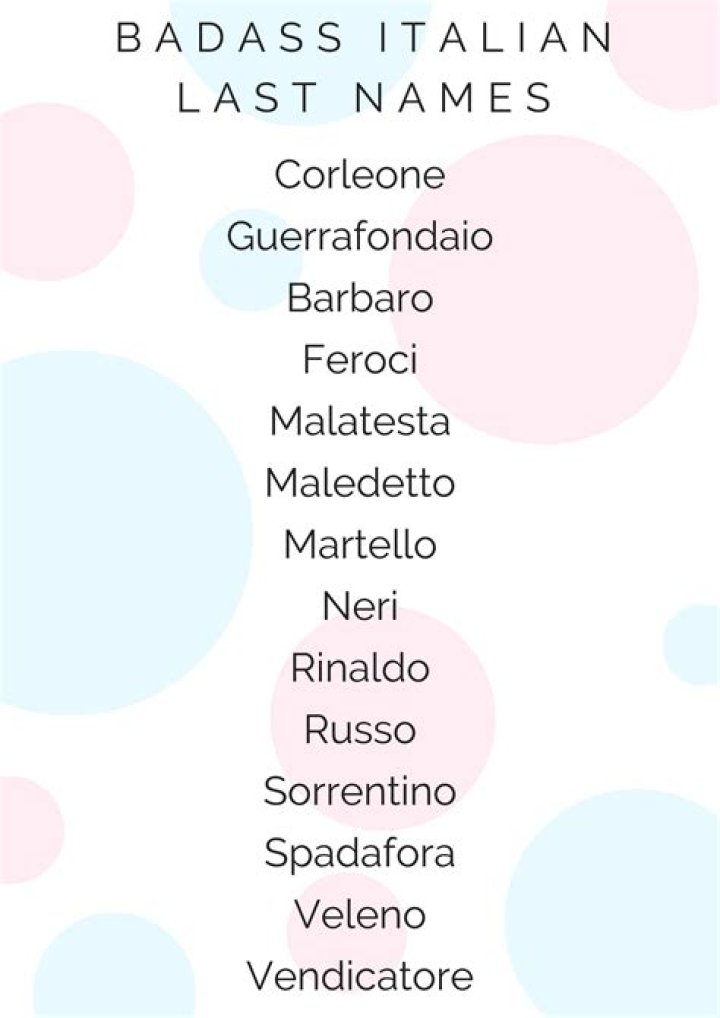
Italy, a land rich in history and culture, boasts a fascinating array of traditional Italian last names that reflect its diverse heritage. These surnames not only carry the legacy of ancient civilizations but also tell the stories of families, regions, and traditions. As we delve into the world of Italian surnames, we uncover the unique characteristics that make them distinct and meaningful.
Traditional Italian last names are more than just identifiers; they are a testament to the country's vibrant past. From the rolling hills of Tuscany to the bustling streets of Naples, each region contributes its own flavor to the tapestry of Italian surnames. These names often derive from geographical features, occupations, and familial ties, offering a glimpse into the lives of those who bore them.
In this article, we will explore the origins, meanings, and significance of traditional Italian last names. Whether you're tracing your ancestry or simply fascinated by the beauty of Italian culture, this guide will provide valuable insights into the world of Italian surnames. Let's embark on this journey through time and tradition.
Origins of Traditional Italian Last Names
Traditional Italian last names have deep roots in the country's history. The use of surnames became widespread during the Middle Ages as a way to distinguish individuals within growing populations. Before this period, people were often identified by their first names or nicknames, but as communities expanded, the need for more specific identifiers arose.
Italian last names can be traced back to various sources, including patronymics, geographical locations, occupations, and physical characteristics. For example, the surname "Rossi" is derived from the Italian word for "red," likely referring to someone with red hair or a ruddy complexion. Similarly, "Ferrari" originates from the occupation of a blacksmith, highlighting the importance of trades in shaping Italian surnames.
Historical Development of Surnames
The development of Italian last names was influenced by historical events, such as invasions, migrations, and political changes. The Roman Empire, for instance, left a lasting impact on Italian nomenclature, introducing Latin-based surnames that are still in use today. Additionally, the regional dialects of Italy contributed to the diversity of surnames, with each area developing its own unique naming conventions.
Common Types of Italian Last Names
Italian surnames can be categorized into several types based on their origins and meanings. Understanding these categories provides insight into the cultural and historical context of Italian last names.
Patronymic Surnames
Patronymic surnames are derived from the first name of a person's father or ancestor. Examples include "Di Carlo" (son of Carlo) and "De Luca" (son of Luca). These names emphasize familial ties and are prevalent throughout Italy.
Occupational Surnames
Occupational surnames reflect the professions of ancestors. For instance, "Contadino" means farmer, while "Calzolari" refers to a shoemaker. These names highlight the importance of trades in Italian society.
Geographical Surnames
Geographical surnames are based on the place of origin or residence of an individual. Names like "Romano" (from Rome) and "Veneto" (from Venice) are common examples. These surnames often indicate a strong connection to a particular region or city.
Geographical Influences on Italian Surnames
Italy's diverse geography has played a significant role in shaping its surnames. The country's varied landscapes, from the mountains of the north to the islands of the south, have influenced the development of regional naming patterns.
In northern Italy, surnames often reflect the influence of neighboring countries, such as France and Austria. For example, the surname "Bianchi" is common in this region, derived from the French word "blanc" meaning white. In contrast, southern Italy is known for its Greek and Arabic influences, resulting in surnames like "Greco" and "Siciliano."
Regional Variations
- Tuscany: Surnames in Tuscany often have a poetic quality, with names like "Botticelli" and "Pucci" reflecting the region's artistic heritage.
- Sicily: Sicilian surnames are influenced by Greek and Arabic cultures, with names like "Calabrese" and "Palermo" indicating a strong regional identity.
- Venice: Venetian surnames often incorporate elements of trade and commerce, such as "Marino" (sailor) and "Zanetti" (merchant).
Famous Italian Last Names
Some Italian last names have gained international recognition due to their association with notable figures in history, art, and science. These surnames not only carry the legacy of their bearers but also contribute to the global perception of Italian culture.
For example, the surname "Rossi" is one of the most common Italian last names and has been borne by numerous prominent individuals, including the composer Gioachino Rossini. Similarly, "Ferrari" is synonymous with luxury and speed, thanks to the iconic car manufacturer founded by Enzo Ferrari.
Notable Italian Surnames
- Michelangelo: The renowned artist who created masterpieces like the Sistine Chapel ceiling.
- Da Vinci: The polymath whose contributions to art and science continue to inspire.
- Galilei: The scientist who revolutionized our understanding of the universe.
Understanding the Meaning Behind Italian Surnames
Italian last names often carry deeper meanings that reflect the characteristics, occupations, or origins of their bearers. By examining the etymology of these surnames, we can gain a better understanding of the people and places they represent.
For instance, the surname "Morelli" is derived from the Italian word "morrello," meaning dark-skinned or swarthy. This name likely referred to someone with a darker complexion, possibly of Mediterranean or North African descent. Similarly, "Monti" is derived from the Italian word for "mountains," indicating a connection to a mountainous region.
Symbolism in Italian Surnames
Many Italian surnames incorporate symbolic elements that convey specific meanings. For example, the surname "Lupo" (wolf) may symbolize strength and resilience, while "Leone" (lion) represents courage and nobility. These names often reflect the values and aspirations of the families who bear them.
Regional Differences in Italian Last Names
Italy's rich regional diversity is reflected in its surnames, with each area contributing its own unique naming traditions. From the rolling hills of Tuscany to the sun-drenched beaches of Sicily, Italian last names vary significantly across the country.
In central Italy, surnames often have a lyrical quality, with names like "Amore" (love) and "Cantoni" (singer) reflecting the region's artistic heritage. In contrast, southern Italy is known for its robust and expressive surnames, such as "Sorrentino" and "Napoli."
Key Regional Characteristics
- North: Influenced by neighboring countries, with names like "Bianchi" and "Rossi."
- Center: Known for lyrical and artistic surnames, such as "Amore" and "Cantoni."
- South: Characterized by robust and expressive names, like "Sorrentino" and "Napoli."
Historical Context of Italian Surnames
The history of Italy is intricately linked to the development of its last names. From the Roman Empire to the Renaissance, each era has left its mark on Italian nomenclature, shaping the surnames we know today.
During the Roman period, Latin-based surnames became prevalent, with names like "Aurelius" and "Julius" reflecting the power and influence of the Roman Empire. The Middle Ages saw the rise of patronymic and occupational surnames, while the Renaissance brought a renewed focus on art and culture, influencing the naming conventions of the time.
Key Historical Influences
- Roman Empire: Latin-based surnames like "Aurelius" and "Julius."
- Middle Ages: Patronymic and occupational surnames, such as "Di Carlo" and "Ferrari."
- Renaissance: Artistic and cultural influences, with names like "Michelangelo" and "Da Vinci."
Modern Usage of Traditional Italian Last Names
In the modern era, traditional Italian last names continue to hold significance, both in Italy and among Italian communities around the world. These surnames serve as a link to the past, connecting individuals to their ancestors and cultural heritage.
Today, Italian last names are often used in genealogical research, helping people trace their family histories and connect with distant relatives. Additionally, the global popularity of Italian culture has led to an increased interest in Italian surnames, with many people adopting them as a way to celebrate their Italian roots.
Global Influence of Italian Surnames
Italian last names have gained international recognition through their association with prominent figures in various fields. From fashion designers like Versace and Armani to musicians like Pavarotti and Bocelli, Italian surnames have become synonymous with excellence and creativity.
Using Italian Last Names for Genealogy
Italian last names are invaluable tools for genealogical research, providing clues about family origins, migrations, and historical events. By studying the etymology and distribution of these surnames, researchers can uncover valuable information about their ancestors and the places they lived.
For example, the surname "Contadino" may indicate that an ancestor was a farmer, while "Romano" suggests a connection to the city of Rome. By combining this information with historical records and family documents, genealogists can build a comprehensive picture of their family history.
Conclusion
Traditional Italian last names offer a fascinating glimpse into the rich history and culture of Italy. From their origins in ancient civilizations to their modern-day usage, these surnames tell the stories of families, regions, and traditions. By exploring the meanings and influences behind Italian surnames, we gain a deeper appreciation for the country's diverse heritage.
As you continue your journey into the world of Italian last names, consider delving deeper into your own family history or exploring the stories behind the surnames of famous Italians. Share your thoughts and discoveries in the comments below, and don't forget to explore other articles on our site for more insights into Italian culture and history.


