
Mars Position from Sun: Understanding the Red Planet's Place in Our Solar System
By Mia Phillips
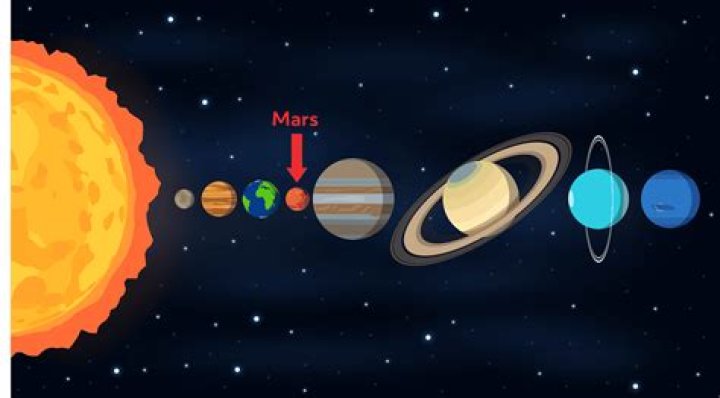
Since ancient times, Mars has fascinated humanity with its distinctive reddish glow and mysterious presence in our night sky. Mars position from sun plays a crucial role in shaping its characteristics, influencing its climate, and determining its potential for supporting life. As we continue to explore this enigmatic planet, understanding its place in our solar system becomes increasingly important.
Mars, often referred to as the "Red Planet," has long been a subject of fascination for scientists and space enthusiasts alike. Its position relative to the Sun not only affects its physical properties but also shapes our understanding of its potential as a destination for future human exploration.
In this comprehensive article, we will delve into the intricacies of Mars' position in the solar system, exploring its distance from the Sun, orbital characteristics, and the implications of its location for both scientific research and future space missions.
Mars Distance from the Sun
Mars position from the Sun is a critical factor in understanding its environment and behavior. On average, Mars is approximately 141.6 million miles (227.9 million kilometers) away from the Sun. This distance places Mars as the fourth planet in our solar system, following Mercury, Venus, and Earth.
The distance between Mars and the Sun varies due to the elliptical shape of Mars' orbit. At its closest point (perihelion), Mars is about 128.4 million miles (206.7 million kilometers) from the Sun. At its farthest point (aphelion), the distance increases to approximately 154.8 million miles (249.2 million kilometers).
This variation in distance has significant implications for Mars' climate, seasons, and overall habitability. Understanding these variations is essential for planning future missions and assessing the planet's potential for supporting life.
Mars Orbital Characteristics
Orbital Shape and Eccentricity
Mars' orbit around the Sun is elliptical, meaning it is not a perfect circle. The eccentricity of Mars' orbit is approximately 0.093, which is higher than Earth's orbital eccentricity of 0.0167. This eccentricity results in significant variations in Mars' distance from the Sun throughout its orbit.
These variations affect Mars' climate and weather patterns, contributing to its extreme seasonal changes. For example, during the Martian summer in the southern hemisphere, the planet is closer to the Sun, resulting in warmer temperatures and increased dust storm activity.
Orbital Period and Speed
Mars completes one orbit around the Sun in approximately 687 Earth days, or about 1.88 Earth years. This longer orbital period is due to Mars' greater distance from the Sun compared to Earth. The average orbital speed of Mars is about 24.1 kilometers per second (15 miles per second), slower than Earth's orbital speed of 29.8 kilometers per second (18.5 miles per second).
These differences in orbital speed and period have important implications for planning space missions to Mars, particularly in terms of launch windows and travel times.
Impact on Mars' Climate
The position of Mars from the Sun significantly influences its climate and atmospheric conditions. Mars' average surface temperature is about -80 degrees Fahrenheit (-62 degrees Celsius), much colder than Earth's average temperature of 57 degrees Fahrenheit (14 degrees Celsius).
Several factors contribute to Mars' cold climate, including its distance from the Sun, thin atmosphere, and lack of a significant magnetic field. These conditions result in extreme temperature fluctuations between day and night, as well as between the planet's hemispheres.
Additionally, Mars' elliptical orbit causes significant seasonal variations, with the southern hemisphere experiencing more extreme seasonal changes than the northern hemisphere. This is due to the southern hemisphere's summer occurring when Mars is closest to the Sun, resulting in higher temperatures and increased dust storm activity.
Comparison with Earth's Position
Comparing Mars position from the Sun to Earth's position provides valuable insights into the differences between these two planets. Earth is approximately 93 million miles (150 million kilometers) from the Sun, placing it in the "habitable zone" where liquid water can exist on the surface.
- Earth's orbit is nearly circular, with an eccentricity of 0.0167, compared to Mars' more elliptical orbit with an eccentricity of 0.093.
- Earth completes one orbit around the Sun in 365.25 days, while Mars takes about 687 Earth days to complete its orbit.
- Earth's average surface temperature is significantly warmer than Mars', due in part to its thicker atmosphere and stronger magnetic field.
These differences highlight the challenges and opportunities associated with exploring and potentially colonizing Mars.
Mars Exploration and Position
Mars position from the Sun has been a key consideration in planning and executing space missions to the Red Planet. The distance between Earth and Mars varies significantly depending on their positions in their respective orbits, with the closest approach occurring approximately every 26 months during an event known as "opposition."
During opposition, Mars and the Sun are on directly opposite sides of Earth, providing the shortest possible distance between the two planets. This optimal alignment allows for more efficient and cost-effective missions, as spacecraft can travel to Mars using less fuel and in less time.
Many successful Mars missions, including NASA's Perseverance rover and the European Space Agency's ExoMars mission, have taken advantage of these favorable launch windows to maximize efficiency and reduce costs.
Future Missions and Mars Position
Human Exploration of Mars
As we look to the future, Mars position from the Sun will continue to play a critical role in planning and executing human missions to the Red Planet. NASA's Artemis program aims to return humans to the Moon by the mid-2020s, with the ultimate goal of using the Moon as a stepping stone for Mars exploration.
SpaceX's Starship program represents another ambitious effort to send humans to Mars, with the goal of establishing a permanent human settlement on the planet. Both programs will need to carefully consider Mars' position relative to Earth and the Sun when planning launch windows, travel times, and mission durations.
Technological Advancements
Advancements in propulsion technology, life support systems, and habitat design will be essential for overcoming the challenges posed by Mars' distance from the Sun. These innovations will enable safer, more efficient, and more sustainable missions to the Red Planet, paving the way for future human exploration and potential colonization.
Potential for Life on Mars
Mars position from the Sun has significant implications for the planet's potential to support life. While the Red Planet's harsh environment and extreme conditions make it challenging for life as we know it to exist, recent discoveries have raised intriguing possibilities.
Subsurface water, organic molecules, and methane plumes detected by Mars rovers and orbiters suggest that microbial life could potentially exist beneath the planet's surface. Additionally, the presence of ancient riverbeds and lakebeds indicates that Mars may have been more hospitable to life in the distant past.
Ongoing research and future missions will continue to explore these possibilities, seeking to answer one of humanity's most profound questions: Are we alone in the universe?
Common Myths About Mars Position
Despite the wealth of scientific knowledge about Mars position from the Sun, several misconceptions persist. Below are some common myths and the truth behind them:
- Mars is the closest planet to Earth: While Mars is one of Earth's closest neighbors, its distance varies significantly depending on the positions of the two planets in their respective orbits. At times, Venus is actually closer to Earth than Mars.
- Mars appears as large as the Moon in the night sky: This myth, often referred to as the "Mars Hoax," is completely false. Even at its closest approach to Earth, Mars appears as a bright star-like object in the night sky, nowhere near the size of the Moon.
- Mars has a similar atmosphere to Earth: Mars' atmosphere is extremely thin, composed primarily of carbon dioxide, with only trace amounts of oxygen and nitrogen. This makes it vastly different from Earth's atmosphere and unsuitable for human life without significant technological intervention.
Key Data on Mars Position
Below is a summary of key data related to Mars position from the Sun:
- Average distance from the Sun: 141.6 million miles (227.9 million kilometers)
- Closest distance (perihelion): 128.4 million miles (206.7 million kilometers)
- Farthest distance (aphelion): 154.8 million miles (249.2 million kilometers)
- Orbital period: 687 Earth days (1.88 Earth years)
- Orbital speed: 24.1 kilometers per second (15 miles per second)
Conclusion
Mars position from the Sun plays a crucial role in shaping our understanding of the Red Planet and its potential for supporting life. From its elliptical orbit and extreme seasonal variations to its implications for future exploration and colonization, Mars' position in our solar system continues to captivate scientists and space enthusiasts alike.
We invite you to share your thoughts and questions in the comments section below. For more fascinating insights into the mysteries of our solar system, explore our other articles on planetary science and space exploration. Together, let's continue to unravel the secrets of the universe!

![Decoding Movie Rules: Understanding & Enjoying Films | [Movierulz] & Beyond](https://silver.isevcloud.co.uk/uploads/3-movierulz-brings-the-latest-hollywood-movierulz-news-3movierulz-also-brings-movie-news-tv-news-trailers-reviews-movierulz-articles-in-south-ind-movies-are-more-than-just-a-form-of-entertainment-they-are-a-reflection-of-culture-storytelling-and-human-emotions-understanding-the-rules-that-govern-films-can-enhance-your-viewing-experience-and-provide-deeper-insights-into-the-narratives-presented-in-this-article-we-will-explore-the-five-essential-movie-rules-that-every-cinephile-should-know-before-movierulz-2025-latest-hd-telugu-kannada-tamil-south-indian-movies-web-series-shows-kdramas-watch-at-high-quality-on-movierulz-tv-this-page-is-intended-to-document-significant-changes-to-the-movie-rules-over-the-course-of-the-site-u2019s-history-this-is-far-from-a-complete-list-with-emphasis-being-placed-on-more-recent-rule-changes-standard-goals-based-on-di-u2026-understanding-movierules-is-essential-for-filmmakers-producers-and-even-audiences-these-regulations-impact-everything-from-the-production-phase-to-distribution-and-viewership-by-adhering-to-these-rules-filmmakers-can-navigate-the-complex-landscape-of-content-creation-ensuring-their-work-is-both-legally-compliant-and-culturally-sensitive-movie-show-times-schedules-and-tickets-in-los-angeles-long-beach-anaheim-santa-ana-irvine-burbank-lakewood-santa-monica-fountain-valley-orange-pasadena-ca-when-it-comes-to-enjoying-films-understanding-the-core-principles-that-govern-cinematic-storytelling-can-elevate-your-viewing-experience-significantly-the-5-movie-rules-com-framework-offers-a-set-of-guidelines-designed-to-help-both-filmmakers-and-audiences-appreciate-the-intricacies-of-modern-cinema-in-this-article-we-will-explore-these-five-essential-rules-and-this-combination-of-comfort-variety-and-free-access-makes-movierulz-profoundly-attractive-especially-for-viewers-on-a-tight-budget-the-dark-side-of-piracy-we-would-like-to-show-you-a-description-here-but-the-site-won-u2019t-allow-us-movierulz-com-movierulz-latest-bollywood-and-hollywood-movies-watch-online-full-free-movierulz-is-wide-range-collection-of-telugu-movies-tamil-malayalam-bengali-kannada-movierulz-movierulz-provide-a-wide-range-of-telugu-movies-tamil-malayalam-and-hindi-movies-watch-full-telugu-movies-online-anytime-anywhere-on-zee5-also-explore-41-telugu-movies-online-in-full-hd-from-our-latest-telugu-movies-collection-movies-are-more-than-just-a-form-of-entertainment-they-are-a-reflection-of-culture-storytelling-and-human-emotions-understanding-the-rules-that-govern-films-can-enhance-your-viewing-experience-and-provide-deeper-insights-into-the-narratives-presented-in-this-article-we-will-explore-the-five-essential-movie-rules-that-every-cinephile-should-know-before-movierulz-latest-featured-telugu-movies-watch-online-download-full-free-collection-of-bollywood-movies-tamil-malayalam-dubbed-kannada-5movierulz-movierulz-is-a-piracy-website-that-leaks-the-tamil-telugu-kannada-hindi-movies-and-allows-users-to-download-movies-in-free-check-out-the-latest-news-and-updates-on-meta-movierulz-here-enjoy-watching-new-telugu-movies-release-of-2025-experience-the-latest-and-new-south-indian-movies-on-your-mobile-device_720.jpg)

