
Mastering the Am7 Guitar Chord: A Comprehensive Guide for Beginners and Beyond
By John Peck
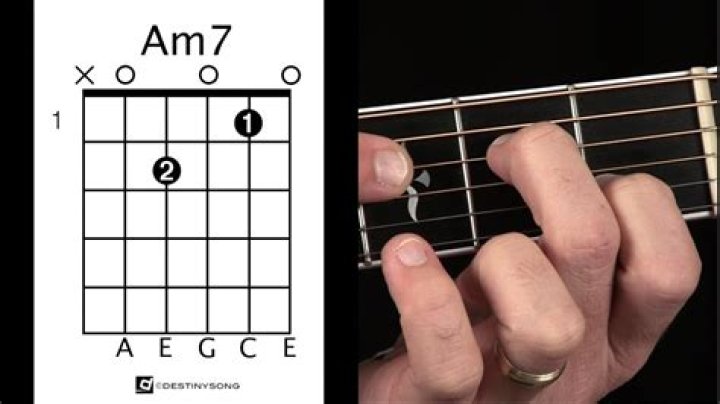
Learning to play the Am7 guitar chord can significantly enhance your musical journey, whether you're a beginner or an experienced guitarist. This versatile chord is widely used across various genres, making it a fundamental skill to master. By understanding its structure, application, and techniques, you can elevate your guitar playing to new heights.
Many guitarists find the Am7 chord intriguing because of its unique sound and versatility. It adds depth and emotion to your music, making it a favorite among musicians. This article will guide you step-by-step through mastering this essential chord, ensuring you have all the tools needed to incorporate it into your playing.
Whether you're looking to improve your finger placement, understand chord progressions, or simply want to explore the possibilities of the Am7 guitar chord, this guide is designed to help. Let's dive into the world of Am7 and uncover its secrets.
Understanding the Am7 Guitar Chord
The Am7 chord, short for A minor 7th, is a staple in the world of music. It belongs to the family of minor seventh chords, which are known for their rich, jazzy sound. Understanding its structure and function is crucial for any guitarist aiming to expand their repertoire.
This chord is formed by combining the notes A, C, E, and G. Its unique combination of notes gives it a distinct sound that can add depth and complexity to your music. Whether you're playing blues, jazz, or pop, the Am7 chord can enhance the overall feel of your compositions.
Learning the Am7 chord not only improves your technical skills but also broadens your musical vocabulary. It opens up new possibilities for chord progressions and improvisation, making it an invaluable tool for any musician.
Basic Structure of the Am7 Chord
Understanding the Notes
To play the Am7 chord, you need to understand its basic structure. The notes that make up this chord are A (root), C (minor third), E (perfect fifth), and G (minor seventh). Each note plays a crucial role in creating the distinctive sound of the Am7 chord.
Here’s a breakdown of the notes:
- A - Root note
- C - Minor third
- E - Perfect fifth
- G - Minor seventh
By understanding these notes, you can experiment with different finger placements and voicings to find what works best for you.
Fingering Techniques for Playing Am7
Proper fingering is essential for playing the Am7 chord smoothly and accurately. There are several ways to finger this chord, but one common method involves using your first, second, and third fingers.
Here’s a step-by-step guide:
- Place your first finger on the second fret of the D string.
- Place your second finger on the second fret of the G string.
- Place your third finger on the second fret of the B string.
- Strum from the A string down, muting the low E string if necessary.
This fingering allows for a clean and crisp sound, making it easier to transition between chords.
Common Variations of the Am7 Chord
Exploring Different Voicings
The Am7 chord can be played in various positions on the guitar, each offering a slightly different sound. Here are some common variations:
- Open Position: Played with open strings, providing a bright and resonant sound.
- Barre Chord: Allows for greater flexibility and can be moved up and down the fretboard.
- Inversions: Rearranging the order of notes to create different textures and moods.
Experimenting with these variations can help you find the one that best suits your playing style and the context of your music.
Am7 in Chord Progressions
The Am7 chord is often used in chord progressions to create a smooth and melodic flow. It works well with other minor and major chords, adding depth and interest to your music.
Some popular progressions featuring the Am7 chord include:
- Am7 - Dm7 - Gmaj7
- Am7 - Em7 - Fmaj7
- Am7 - Cmaj7 - Gmaj7
These progressions are commonly found in jazz, pop, and rock music, making them versatile and widely applicable.
Tips for Mastering the Am7 Chord
Practicing Efficiently
To master the Am7 chord, consistent practice is key. Here are some tips to help you improve:
- Start slowly and focus on accuracy before increasing speed.
- Practice transitioning between the Am7 chord and other common chords.
- Use a metronome to develop timing and rhythm.
- Experiment with different strumming patterns to enhance your playing.
By incorporating these tips into your practice routine, you'll see significant improvement in your ability to play the Am7 chord.
Practical Applications in Songs
Real-World Examples
The Am7 chord is featured in countless songs across various genres. Here are a few examples:
- "Here Comes the Sun" by The Beatles: Uses the Am7 chord in its iconic progression.
- "Moondance" by Van Morrison: Incorporates the Am7 chord for its jazzy feel.
- "Let It Be" by The Beatles: Features the Am7 chord in its bridge section.
Listening to and analyzing these songs can provide valuable insight into how the Am7 chord is used in real-world contexts.
Advanced Techniques for Am7
Taking Your Skills to the Next Level
Once you've mastered the basics, you can explore advanced techniques to further enhance your Am7 chord playing. These include:
- Using alternate tunings to create unique sounds.
- Experimenting with fingerpicking patterns for added complexity.
- Incorporating slides and bends to add expression.
These techniques can add depth and character to your playing, making your music more dynamic and engaging.
Common Mistakes to Avoid
Even experienced guitarists can fall into common traps when playing the Am7 chord. Here are a few mistakes to watch out for:
- Not muting the low E string, resulting in a muddy sound.
- Using incorrect finger placement, leading to poor intonation.
- Rushing through practice, which can hinder proper technique development.
By being aware of these potential pitfalls, you can avoid them and ensure your playing remains clean and precise.
Conclusion and Next Steps
In conclusion, mastering the Am7 guitar chord is a valuable skill that can greatly enhance your musical abilities. By understanding its structure, practicing proper techniques, and exploring its applications, you can unlock new possibilities in your playing.
We encourage you to take action by incorporating the tips and techniques discussed in this guide into your practice routine. Share your experiences and progress in the comments below, and don't forget to explore other articles on our site for more guitar tips and tricks.
Remember, the journey of mastering the Am7 chord is just the beginning. Keep practicing, experimenting, and expanding your musical horizons. Happy strumming!


