
Melting Temperature of Steel: A Comprehensive Guide to Understanding Steel's Heat Resistance
By Sarah Rowe
Steel is one of the most widely used materials in construction, manufacturing, and engineering, primarily due to its incredible strength and durability. However, understanding the melting temperature of steel is crucial for its proper application, especially in high-temperature environments. This article will explore the melting point of steel, its variations, and how it impacts various industries.
The melting temperature of steel plays a significant role in determining its suitability for different applications. Whether it's used in building skyscrapers, manufacturing machinery, or creating tools, knowing the temperature at which steel melts is essential for ensuring safety and performance.
In this guide, we will delve into the science behind steel's melting point, explore its variations based on composition, and discuss its implications in real-world scenarios. Whether you're an engineer, architect, or simply curious about steel's properties, this article will provide you with valuable insights.
What is Melting Temperature?
The melting temperature of a material refers to the point at which it transitions from a solid state to a liquid state. For steel, this temperature varies depending on its composition, but it generally falls between 1,370°C and 1,510°C (2,500°F to 2,750°F). Understanding this concept is vital for industries that rely on steel for their operations.
Why is Melting Temperature Important?
Melting temperature is a critical factor in determining the suitability of steel for various applications. It affects the material's performance under extreme conditions, such as in furnaces, engines, or high-temperature environments. Engineers and manufacturers must carefully consider this property to ensure the longevity and safety of their products.
Melting Point of Steel
The melting point of steel typically ranges from 1,370°C to 1,510°C, depending on its composition. Pure iron, the primary component of steel, has a melting point of approximately 1,538°C (2,800°F). However, the addition of other elements, such as carbon, chromium, nickel, and manganese, can alter this temperature.
How is the Melting Point Determined?
Scientists and engineers use specialized equipment, such as furnaces and thermocouples, to measure the melting point of steel accurately. This process involves heating the material until it transitions from a solid to a liquid state, recording the exact temperature at which this occurs.
Factors Affecting the Melting Point of Steel
Several factors influence the melting point of steel, including:
- Carbon Content: Higher carbon levels increase the strength of steel but can lower its melting point.
- Alloying Elements: Adding elements like chromium, nickel, and manganese can raise or lower the melting point, depending on their concentration.
- Purity: Impurities in steel can affect its melting temperature, often lowering it.
- Pressure: Although less significant in practical applications, pressure can influence the melting point of steel in extreme conditions.
Types of Steel and Their Melting Points
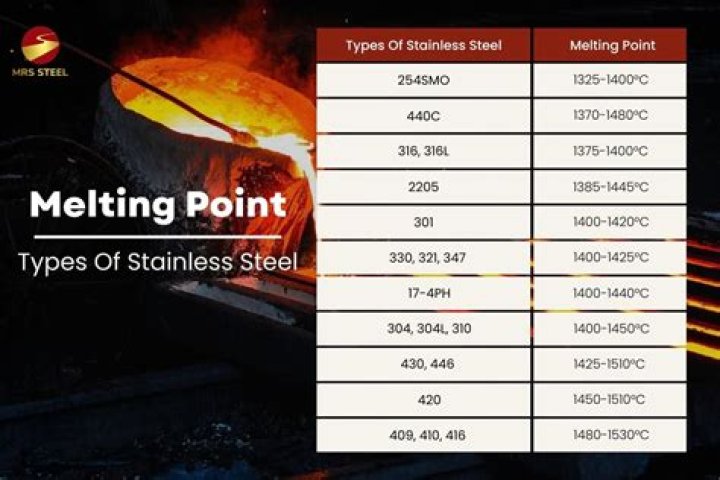
Different types of steel have varying melting points due to their unique compositions. Below are some common types of steel and their approximate melting temperatures:
- Carbon Steel: 1,425°C to 1,540°C
- Stainless Steel: 1,400°C to 1,450°C
- Tool Steel: 1,370°C to 1,480°C
- Alloy Steel: 1,350°C to 1,500°C
Carbon Steel vs Stainless Steel
Carbon steel generally has a higher melting point than stainless steel due to its lower chromium content. Stainless steel, however, offers superior corrosion resistance, making it ideal for certain applications despite its slightly lower melting temperature.
Applications of High-Temperature Steel
High-temperature steel is widely used in industries that require materials capable of withstanding extreme conditions. Some common applications include:
- Aerospace: Components for jet engines and aircraft structures.
- Automotive: Engine parts and exhaust systems.
- Power Generation: Turbines and boilers in power plants.
- Construction: Structural beams and supports for high-rise buildings.
Common Uses of Steel in Industry
Steel's versatility makes it indispensable in numerous industries. Below are some of its most common applications:
- Construction: Steel is used for building bridges, skyscrapers, and infrastructure projects.
- Manufacturing: It serves as the primary material for machinery, tools, and equipment.
- Transportation: Steel is integral to the production of vehicles, ships, and trains.
- Energy: It is used in pipelines, wind turbines, and oil rigs.
Why is Steel Preferred in Construction?
Steel's high strength-to-weight ratio, durability, and resistance to deformation make it an ideal choice for construction projects. Its ability to withstand extreme temperatures also enhances its appeal in this field.
Comparison with Other Materials
While steel is one of the most widely used materials, it is important to compare it with other options to determine its suitability for specific applications. Below is a comparison of steel with other common materials:
Steel vs Aluminum
Aluminum has a much lower melting point than steel, typically around 660°C (1,220°F). While aluminum is lighter and more corrosion-resistant, steel's higher melting point makes it preferable for high-temperature applications.
Steel vs Titanium
Titanium has a higher melting point than steel, approximately 1,668°C (3,034°F), but it is significantly more expensive. Steel remains the preferred choice for most applications due to its cost-effectiveness and availability.
Safety Considerations
Working with steel at high temperatures requires strict safety protocols to prevent accidents and injuries. Below are some essential safety considerations:
- Personal Protective Equipment (PPE): Workers should wear heat-resistant gloves, helmets, and clothing.
- Ventilation: Proper ventilation is crucial to prevent the buildup of harmful gases and fumes.
- Training: All personnel must undergo comprehensive training on handling molten steel safely.
Handling Molten Steel
Molten steel is extremely dangerous and can cause severe burns or even fatalities if mishandled. It is essential to use specialized equipment and follow strict safety guidelines when working with molten steel.
Future Developments in Steel Technology
Advancements in metallurgy and materials science continue to enhance the properties of steel. Researchers are exploring new alloy compositions and manufacturing techniques to improve its strength, corrosion resistance, and melting point. Some promising developments include:
- Advanced High-Strength Steels (AHSS): These steels offer superior strength and formability, making them ideal for automotive and construction applications.
- Nanostructured Steels: These steels have improved mechanical properties due to their unique nano-scale structures.
- Environmentally-Friendly Steels: Efforts are underway to develop steels with reduced carbon footprints and improved recyclability.
The Role of AI in Steel Manufacturing
Artificial intelligence (AI) is increasingly being used in steel manufacturing to optimize processes, reduce costs, and improve product quality. AI-driven systems can predict material behavior under various conditions, helping engineers design better materials and reduce waste.
Conclusion
The melting temperature of steel is a critical property that influences its suitability for various applications. Understanding the factors that affect its melting point, such as composition and purity, is essential for engineers and manufacturers. Steel's versatility, strength, and heat resistance make it an indispensable material in numerous industries.
We encourage you to share your thoughts and experiences with steel in the comments below. Additionally, feel free to explore other articles on our website for more insights into materials science and engineering. Together, let's continue to advance our knowledge and application of this remarkable material.
For further reading, consider the following sources:


