
Soccer Match Length: Everything You Need to Know
By William Brown
Understanding soccer match length is essential for fans, players, and anyone interested in the beautiful game. From official regulations to extra time and stoppages, this article will provide a comprehensive overview of everything related to how long a soccer game lasts. Whether you're a casual observer or a die-hard enthusiast, this guide will ensure you're well-informed about the duration of soccer matches.
Soccer, also known as football in many parts of the world, is one of the most popular sports globally. With millions of fans tuning in to watch matches, it's crucial to understand the structure of a game, including its length. This knowledge not only enhances your enjoyment of the sport but also helps you plan your viewing schedule effectively.
In this article, we'll delve into the regulations governing soccer match length, explore variations in duration, and address common questions about how long soccer games last. By the end of this guide, you'll have a clear understanding of the timeframes involved in soccer matches, ensuring you're well-prepared for any game you watch or participate in.
Official Duration of a Soccer Match
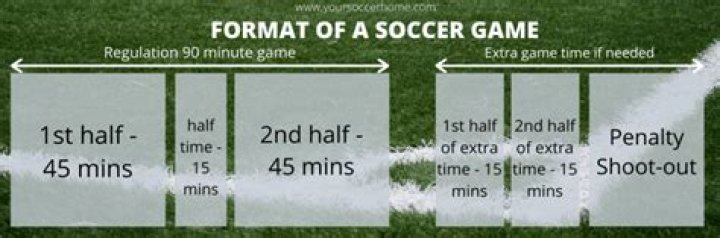
According to the Laws of the Game established by the International Football Association Board (IFAB), a standard soccer match consists of two halves, each lasting 45 minutes. This means that the official duration of a soccer match is typically 90 minutes, excluding stoppages and extra time. The halftime break usually lasts 15 minutes, allowing players to rest and teams to strategize.
Structure of the Game
Here’s a breakdown of the structure of a standard soccer match:
- First half: 45 minutes
- Halftime break: 15 minutes
- Second half: 45 minutes
While the official time is set at 90 minutes, the actual duration can vary due to stoppages, injuries, and other factors. This is why it's important to understand the nuances of soccer match length beyond the basic timeframe.
Extra Time in Soccer Matches
In certain competitions, such as knockout tournaments, matches that end in a draw after 90 minutes may proceed to extra time. Extra time consists of two additional periods, each lasting 15 minutes, for a total of 30 minutes. If the score remains tied after extra time, the match may be decided by a penalty shootout.
When is Extra Time Used?
Extra time is typically employed in the following scenarios:
- Knockout stages of tournaments (e.g., World Cup, Champions League)
- Competitions where a winner must be determined
It's worth noting that not all competitions use extra time. Some may opt for penalty shootouts directly after the 90-minute mark if a winner is needed immediately.
Stoppage Time: What You Need to Know
Stoppage time, also known as injury time, is added to the end of each half to compensate for delays during the game. These delays can include injuries, substitutions, goal celebrations, and other stoppages. The amount of stoppage time is determined by the match officials and is announced at the end of each half.
How is Stoppage Time Calculated?
While there is no strict formula for calculating stoppage time, referees generally consider the following factors:
- Duration of injuries
- Number of substitutions
- Time lost due to goal celebrations
- Other significant delays during the match
Stoppage time can vary significantly from match to match, but it typically ranges from a few minutes to over 10 minutes in cases with numerous delays.
Youth Soccer Match Length
Youth soccer matches often have shorter durations compared to professional games. The length of youth matches varies depending on the age group and competition level. For example, matches for younger players might last 60 minutes or less, while older youth teams may play games closer to the standard 90-minute duration.
Age Group Breakdown
Here’s a general guide to youth soccer match lengths:
- Under-8: 40 minutes total (two 20-minute halves)
- Under-12: 60 minutes total (two 30-minute halves)
- Under-16: 80 minutes total (two 40-minute halves)
These variations ensure that young players can participate in matches suited to their physical and mental capabilities.
Professional vs Amateur Soccer Match Length
While professional soccer matches adhere to the standard 90-minute format, amateur games may differ slightly in duration. Amateur matches often have shorter halves or fewer stoppages, depending on the league or competition rules. However, the core structure of two 45-minute halves remains consistent across most levels of play.
Differences in Amateur Matches
Amateur soccer matches might include the following adjustments:
- Shorter halves (e.g., 40 minutes each)
- No extra time in most cases
- Less emphasis on stoppage time
These modifications cater to the varying skill levels and resources available in amateur soccer.
FIFA Rules on Soccer Match Length
FIFA, the governing body of international soccer, provides clear guidelines on match duration in its Laws of the Game. These rules ensure consistency across competitions worldwide. According to FIFA, a standard match should last 90 minutes, with two 45-minute halves and a 15-minute halftime break. Extra time and stoppage time are also addressed in these regulations.
Key FIFA Guidelines
FIFA emphasizes the following points regarding match length:
- Two 45-minute halves with a 15-minute break
- Addition of stoppage time at the discretion of match officials
- Extra time and penalty shootouts for knockout matches
These rules are designed to maintain fairness and consistency in soccer competitions globally.
Variations in Soccer Match Length
While the standard soccer match lasts 90 minutes, there are several variations depending on the context. For example, friendly matches may have shorter durations, and youth games are tailored to the age group. Additionally, certain competitions might have unique rules regarding extra time and stoppage time.
Examples of Variations
Here are some examples of variations in soccer match length:
- Friendlies: Often shorter than competitive matches
- Youth games: Adjusted durations based on age
- Special competitions: Unique rules for extra time and penalties
Understanding these variations helps fans and participants adapt to different scenarios in soccer.
Factors Affecting Soccer Match Length
Several factors can influence the actual duration of a soccer match beyond the standard 90 minutes. These include injuries, substitutions, weather conditions, and even crowd behavior. Match officials play a crucial role in managing these factors to ensure a fair and efficient game.
Key Influencing Factors
The following factors can affect soccer match length:
- Injuries and medical stoppages
- Substitutions and administrative delays
- Weather conditions and field maintenance
- Unusual incidents (e.g., pitch invasions)
By accounting for these factors, organizers and officials can maintain the integrity of the game while ensuring player safety and fairness.
Common Questions About Soccer Match Length
Many soccer fans have questions about match duration, especially when it comes to extra time, stoppages, and variations in youth games. Below are some frequently asked questions and their answers:
FAQs
- How long is a standard soccer match? A standard soccer match lasts 90 minutes, divided into two 45-minute halves.
- What is stoppage time? Stoppage time is added at the end of each half to compensate for delays during the game.
- Do all matches have extra time? No, extra time is only used in certain competitions, such as knockout tournaments.
These questions highlight the importance of understanding the nuances of soccer match length for both casual fans and avid enthusiasts.
Conclusion: Understanding Soccer Match Length
In conclusion, understanding soccer match length involves more than just knowing the standard 90-minute duration. Factors such as extra time, stoppage time, and variations in youth and amateur games all play a role in shaping the overall experience of watching or participating in soccer. By familiarizing yourself with these aspects, you can enhance your appreciation of the sport and better plan your viewing schedule.
We invite you to share your thoughts and questions in the comments section below. Additionally, feel free to explore other articles on our site for more insights into the world of soccer. Together, let's celebrate the beauty and complexity of this incredible sport!


