The Distance from Earth to Mars: A Comprehensive Guide
By Andrew Thornton
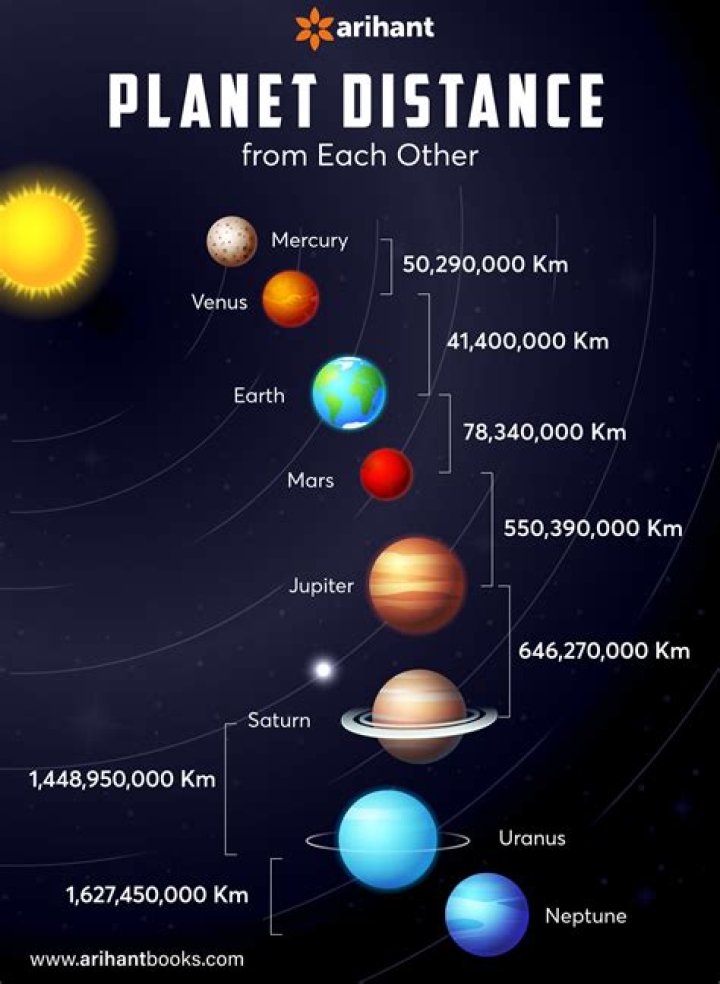
Exploring the distance from Earth to Mars is a fascinating topic that captures the imagination of space enthusiasts worldwide. Understanding this distance helps us appreciate the vastness of our solar system and the challenges involved in space exploration. Whether you're a student, scientist, or simply curious about space, this guide will provide you with all the information you need.
The distance from Earth to Mars varies significantly due to their elliptical orbits around the Sun. This variation makes it essential to understand the factors that influence the distance between these two planets. In this article, we will delve into the details of this cosmic journey, exploring the science behind it and the implications for future missions.
From ancient observations to modern space missions, humanity's fascination with Mars has only grown. This article aims to provide a detailed exploration of the distance from Earth to Mars, covering everything from basic facts to advanced concepts. Let's embark on this cosmic journey together!
Introduction to Earth-Mars Distance
Understanding the distance from Earth to Mars is crucial for space exploration and scientific research. The two planets have elliptical orbits, which means the distance between them changes constantly. This variation affects space missions, communication, and the feasibility of human colonization on Mars.
The average distance from Earth to Mars is approximately 225 million kilometers (140 million miles). However, this figure can vary significantly depending on the position of both planets in their orbits. The closest approach, known as opposition, occurs roughly every 26 months, while the farthest distance, called conjunction, happens when the planets are on opposite sides of the Sun.
Scientists use advanced telescopes and spacecraft to measure these distances accurately. These measurements help in planning missions, designing spacecraft, and ensuring the safety of astronauts. The study of Earth-Mars distance is a vital aspect of modern astronomy.
Understanding the Orbits of Earth and Mars
Both Earth and Mars orbit the Sun in elliptical paths. Earth completes one orbit in about 365.25 days, while Mars takes approximately 687 Earth days. This difference in orbital periods causes the distance between the two planets to fluctuate continuously.
Elliptical Orbits and Their Impact
The elliptical shape of the orbits means that the distance between Earth and Mars is not constant. When the planets are closest to each other, it is called perihelion, and when they are farthest apart, it is called aphelion. These variations are critical for planning space missions.
- Earth's orbit is nearly circular, with a minor eccentricity of 0.0167.
- Mars has a more elliptical orbit, with an eccentricity of 0.0934.
- The difference in eccentricity affects the distance between the two planets.
Variations in the Distance from Earth to Mars
The distance from Earth to Mars varies due to their relative positions in the solar system. At its closest, Mars is approximately 54.6 million kilometers (33.9 million miles) away from Earth. At its farthest, the distance increases to about 401 million kilometers (249 million miles).
Factors Influencing Distance Variations
Several factors contribute to the variations in the distance between Earth and Mars:
- Orbital eccentricity of both planets.
- Relative speed and position in their orbits.
- Gravitational influences from other celestial bodies.
These factors make it challenging to predict the exact distance at any given time. Astronomers use complex calculations and simulations to determine the precise distance between the two planets.
The Closest Approach of Mars to Earth
The closest approach of Mars to Earth, known as opposition, occurs when Mars and the Sun are on directly opposite sides of Earth. During this time, Mars appears brighter and larger in the night sky. This event happens approximately every 26 months and provides an excellent opportunity for observing Mars.
Historical Close Approaches
Some of the most notable close approaches of Mars to Earth include:
- 2003: Mars came within 55.76 million kilometers (34.65 million miles) of Earth, the closest it had been in nearly 60,000 years.
- 2018: Another close approach occurred, with Mars at a distance of 57.6 million kilometers (35.8 million miles).
These events are eagerly awaited by astronomers and space enthusiasts worldwide.
The Farthest Distance between Earth and Mars
At its farthest, Mars is located on the opposite side of the Sun from Earth, a position known as solar conjunction. During this time, the distance between the two planets can reach up to 401 million kilometers (249 million miles). Communication with spacecraft on Mars becomes challenging during this period due to the Sun's interference.
Challenges During Solar Conjunction
During solar conjunction, the Sun's intense radiation can disrupt radio signals between Earth and Mars. This disruption necessitates a temporary pause in communication with spacecraft on Mars. NASA and other space agencies plan accordingly to ensure the safety and functionality of their missions.
How Long Does It Take to Travel from Earth to Mars?
The time it takes to travel from Earth to Mars depends on various factors, including the position of the planets, the type of spacecraft, and the mission objectives. On average, a journey to Mars takes about six to nine months using current technology.
Factors Affecting Travel Time
- Launch window: The optimal time for launching a spacecraft to Mars occurs every 26 months.
- Spacecraft design: The speed and efficiency of the spacecraft influence travel time.
- Mission objectives: Some missions prioritize speed, while others focus on scientific research.
Future advancements in propulsion technology could significantly reduce travel time, making Mars exploration more feasible.
Space Missions to Mars
Since the 1960s, numerous space missions have been launched to study Mars. These missions have provided valuable insights into the planet's atmosphere, geology, and potential for supporting life. Some of the most notable missions include:
- Mariner 4 (1965): The first successful flyby of Mars.
- Viking 1 and 2 (1976): The first successful landings on Mars.
- Mars Rover missions (Spirit, Opportunity, Curiosity, Perseverance): These rovers have explored the Martian surface extensively.
Each mission has contributed to our understanding of Mars and the challenges of space exploration.
Technological Challenges in Mars Exploration
Exploring Mars presents numerous technological challenges. The vast distance between Earth and Mars, combined with the harsh conditions on the planet, requires innovative solutions. Some of the key challenges include:
- Communication delays: Signals take between 4 and 24 minutes to travel between Earth and Mars.
- Surviving extreme temperatures: Mars experiences temperatures as low as -80 degrees Fahrenheit (-62 degrees Celsius).
- Developing sustainable life support systems: Future missions will require advanced systems for air, water, and food production.
Ongoing research and development aim to overcome these challenges and pave the way for human exploration of Mars.
Future Plans for Mars Exploration
The future of Mars exploration looks promising, with several ambitious plans in the works. NASA's Artemis program aims to return humans to the Moon as a stepping stone for Mars missions. SpaceX's Starship project envisions sending humans to Mars within the next decade. These initiatives highlight the growing interest in Mars exploration and colonization.
International Collaboration
International collaboration plays a crucial role in Mars exploration. Countries and organizations worldwide are working together to share resources, knowledge, and technology. This collaboration ensures that future missions are safe, efficient, and scientifically rewarding.
Conclusion
In conclusion, understanding the distance from Earth to Mars is essential for space exploration and scientific research. The variations in distance, caused by the elliptical orbits of both planets, affect mission planning, communication, and the feasibility of human colonization. Through ongoing research and technological advancements, humanity is making significant strides in exploring and understanding Mars.
We invite you to share your thoughts and questions in the comments section below. For more articles on space exploration and astronomy, explore our website. Together, let's continue to unravel the mysteries of the universe!