
Unveiling the Mystery: What Does 51-50 Meaning Represent?
By Michael King
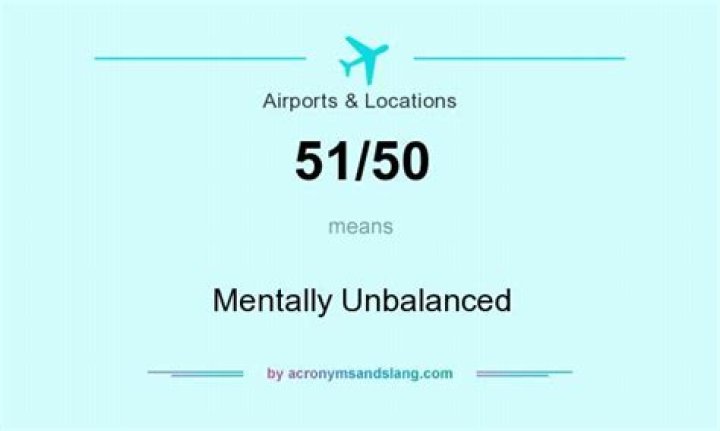
Have you ever come across the term "51-50" and wondered what it means? In today's digital age, abbreviations and codes are everywhere, and understanding them can sometimes feel like solving a puzzle. The phrase "51-50" is no exception. Whether you're curious about its origins, its cultural significance, or its implications, this article aims to demystify the concept for you.
As we delve deeper into the meaning of 51-50, you'll discover that it holds relevance in various contexts. Whether in legal, medical, or even entertainment spheres, the term has carved out its niche. Understanding its nuances will not only broaden your knowledge but also provide clarity on how it impacts different areas of life.
In this comprehensive guide, we'll explore the origins of 51-50, its applications, and its significance across different fields. By the end, you'll have a clear understanding of its meaning and how it applies to real-life scenarios. Let's dive in and unravel the mystery behind 51-50.
The Origin of 51-50 Meaning
The phrase "51-50" originates from California's Welfare and Institutions Code, specifically Section 5150. This section grants peace officers, authorized clinicians, and other designated professionals the authority to involuntarily detain individuals who pose a danger to themselves or others due to a mental health crisis. The term has since been adopted in various contexts, both formal and informal, to describe situations involving mental health emergencies.
Over time, the term has gained traction beyond its legal roots. In popular culture, it has been referenced in music, movies, and TV shows, often symbolizing mental health challenges or crises. Its widespread use highlights the growing awareness and conversation around mental health issues in society.
Understanding the origin of 51-50 provides a foundation for exploring its broader implications. From legal frameworks to cultural references, the term continues to evolve, reflecting the changing landscape of mental health discussions.
51-50 Meaning in Legal Context
In a legal context, 51-50 refers to the involuntary detention of an individual for up to 72 hours for evaluation and treatment. This process is initiated when a qualified professional determines that the individual poses a threat to themselves or others due to a mental health condition. The legal framework surrounding 51-50 is designed to protect both the individual and the public while ensuring proper care and treatment.
Legal Implications Across States
While Section 5150 is specific to California, similar laws exist in other states under different names. For instance, in New York, it's referred to as the "Kendra's Law," while in Texas, it's known as a "mental health hold." These variations highlight the diverse approaches states take in addressing mental health crises.
- California: Section 5150
- New York: Kendra's Law
- Texas: Mental Health Hold
Each state has its own set of regulations and procedures, emphasizing the importance of understanding local laws when dealing with mental health emergencies.
Medical Usage of 51-50
From a medical perspective, 51-50 serves as a critical tool for healthcare professionals to intervene in situations where an individual is unable to make sound decisions due to a mental health crisis. It allows for immediate evaluation and treatment, preventing potential harm to the individual or others.
51-50 and Mental Health
The relationship between 51-50 and mental health is profound. It underscores the need for early intervention and access to mental health services. Studies show that timely intervention can significantly improve outcomes for individuals experiencing mental health crises.
According to the National Alliance on Mental Illness (NAMI), approximately 1 in 5 adults in the U.S. experiences mental illness each year. The implementation of laws like 51-50 plays a crucial role in addressing this growing concern.
51-50 in Popular Culture
Popular culture has embraced the term 51-50, often using it as a metaphor for mental health struggles. Movies like "Silver Linings Playbook" and TV shows such as "13 Reasons Why" have referenced the term, bringing attention to mental health issues and reducing stigma.
Myths and Misconceptions
Despite its widespread use, misconceptions about 51-50 persist. Some believe it is only applicable to violent individuals, while others think it involves long-term commitment. In reality, 51-50 is a short-term measure aimed at stabilizing individuals in crisis and connecting them with appropriate resources.
Clarifying these myths is essential for fostering a better understanding of mental health and its associated challenges.
Statistical Insights on 51-50 Usage
Data from the California Department of Health Care Services reveals that there were over 200,000 involuntary holds under Section 5150 in 2020 alone. This statistic underscores the prevalence of mental health crises and the critical role of 51-50 in addressing them.
Furthermore, research indicates that individuals who receive timely intervention through 51-50 are more likely to recover and reintegrate into society successfully. These findings highlight the importance of continued support and resources for mental health care.
How 51-50 Relates to Everyday Life
For many, understanding 51-50 can have a direct impact on everyday life. Whether you're a healthcare professional, law enforcement officer, or concerned citizen, knowing how to recognize and respond to mental health crises is invaluable.
Here are some practical tips for supporting individuals in crisis:
- Stay calm and approach the situation with empathy.
- Encourage open communication and active listening.
- Know when to seek professional help.
By equipping yourself with knowledge and resources, you can make a meaningful difference in someone's life.
Conclusion and Next Steps
In conclusion, the meaning of 51-50 extends beyond its legal definition to encompass a broader understanding of mental health and crisis intervention. From its origins in California's Welfare and Institutions Code to its representation in popular culture, the term has become a symbol of the ongoing conversation around mental health awareness.
To further your understanding, consider exploring additional resources such as the National Institute of Mental Health (NIMH) or local mental health organizations. Engaging in open discussions and advocating for mental health resources can help create a more supportive and informed community.
We invite you to share your thoughts and experiences in the comments below. Together, we can work towards reducing stigma and promoting mental health awareness. Don't forget to explore other articles on our site for more insights into topics that matter to you.


