
Van Vleck: The Life, Achievements, and Legacy of a Remarkable Scientist
By Emma Valentine
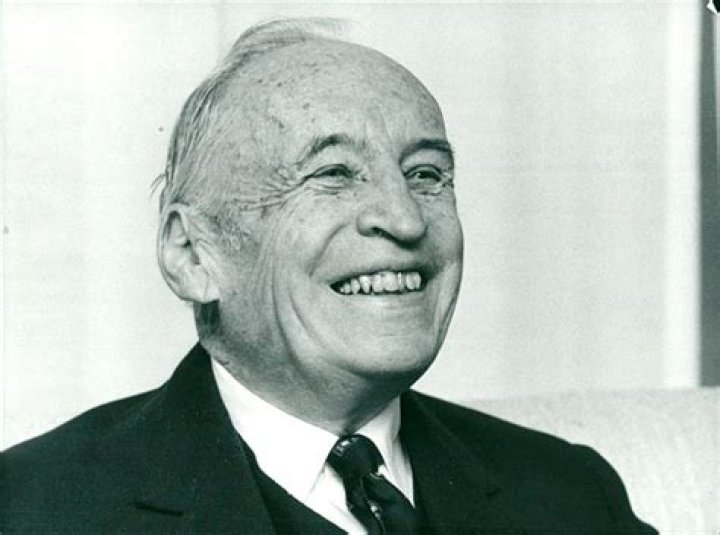
John Hasbrouck Van Vleck is a name that resonates deeply within the scientific community, particularly in the realms of physics and chemistry. His groundbreaking contributions have left an indelible mark on the world of quantum mechanics and magnetism. As one of the pioneers in understanding the electronic structure of materials, Van Vleck's work continues to influence modern science. In this article, we will delve into the life, achievements, and lasting legacy of this remarkable scientist.
Born in 1899, Van Vleck's journey from a young academic prodigy to becoming a Nobel laureate is nothing short of inspiring. His innovative approach to quantum mechanics and his profound insights into atomic behavior have earned him a place among the greats in the scientific world.
Through this article, we aim to provide a comprehensive exploration of Van Vleck's contributions, his influence on modern science, and the principles that guided his research. Let's embark on this journey to discover the man behind the theories that shaped the 20th century's scientific landscape.
Table of Contents
- Biography of John Hasbrouck Van Vleck
- Early Life and Education
- Scientific Career and Contributions
- Impact on Quantum Theory
- Advancements in Magnetism
- The Nobel Prize and Recognition
- Van Vleck's Legacy in Modern Science
- Influence on Education and Mentorship
- Notable Publications and Research
- Conclusion and Final Thoughts
Biography of John Hasbrouck Van Vleck
Early Life and Education
John Hasbrouck Van Vleck was born on March 13, 1899, in Middletown, Connecticut. Raised in a family with deep academic roots, Van Vleck's early exposure to intellectual pursuits set the stage for his future accomplishments. His father, Edward Burr Van Vleck, was a distinguished mathematician, and his grandfather was an astronomer, fostering an environment conducive to scientific inquiry.
Van Vleck's academic journey began at the University of Wisconsin–Madison, where he earned his undergraduate degree in physics. Subsequently, he pursued graduate studies at Harvard University, obtaining his Ph.D. in 1922. His doctoral thesis, which focused on the quantum theory of spectra, laid the foundation for his later groundbreaking work.
Biographical Data of John Hasbrouck Van Vleck
| Full Name | John Hasbrouck Van Vleck |
|---|---|
| Date of Birth | March 13, 1899 |
| Place of Birth | Middletown, Connecticut |
| Education | University of Wisconsin–Madison, Harvard University |
| Field of Study | Physics, Quantum Mechanics |
Scientific Career and Contributions
Van Vleck's career as a scientist was marked by a relentless pursuit of knowledge and innovation. His work bridged the gap between classical and quantum mechanics, providing critical insights into the behavior of atoms and molecules.
Impact on Quantum Theory
One of Van Vleck's most significant contributions was his development of the quantum theory of paramagnetism. By exploring the electronic structure of atoms and molecules, he offered explanations for phenomena that were previously misunderstood. His work in this area provided a deeper understanding of how magnetic properties arise at the atomic level.
- Quantum Theory of Magnetism
- Electronic Structure of Atoms and Molecules
- Spin-Orbit Coupling and Its Effects
Advancements in Magnetism
Van Vleck's research in magnetism extended beyond theoretical frameworks, offering practical applications in material science. His theories on magnetic susceptibility and crystal field theory have become foundational principles in modern physics.
Through his work, Van Vleck demonstrated how external magnetic fields affect the behavior of electrons within atoms, leading to advancements in the study of magnetic materials. This research has had a profound impact on technology, influencing the development of devices such as magnetic resonance imaging (MRI).
The Nobel Prize and Recognition
In 1977, Van Vleck was awarded the Nobel Prize in Physics, sharing the honor with Philip W. Anderson and Sir Nevill F. Mott. The award recognized their pioneering contributions to the theory of electronic structure in magnetic and disordered systems. Van Vleck's receipt of this prestigious accolade underscored the significance of his work in advancing scientific understanding.
His Nobel lecture, titled "The Development of Spin Theory," highlighted the evolution of quantum mechanics and the pivotal role his research played in shaping the field.
Van Vleck's Legacy in Modern Science
The legacy of John Hasbrouck Van Vleck extends far beyond the confines of his lifetime. His theories continue to influence contemporary research, serving as a cornerstone for advancements in quantum mechanics and material science.
Universities and research institutions worldwide have named awards, lectures, and facilities in his honor, perpetuating his influence in the scientific community. Van Vleck's dedication to advancing knowledge and his commitment to mentoring future generations of scientists ensure his lasting impact on the field.
Influence on Education and Mentorship
Throughout his career, Van Vleck was not only a researcher but also an educator. He held academic positions at prestigious institutions, including Harvard University, where he mentored countless students and inspired them to pursue scientific excellence.
His pedagogical approach emphasized critical thinking and problem-solving, equipping his students with the skills necessary to contribute meaningfully to the scientific community. Van Vleck's influence on education continues to inspire generations of scientists.
Notable Publications and Research
Van Vleck's extensive body of work includes numerous publications that have become essential reading for students and researchers in the field. Some of his most notable contributions include:
- "The Theory of Electric and Magnetic Susceptibilities" (1932)
- "Spin Hamiltonians" (1961)
- "The Development of Spin Theory" (Nobel Lecture, 1977)
These publications, supported by rigorous research and innovative thinking, have solidified Van Vleck's place as a leading figure in the scientific community.
Conclusion and Final Thoughts
In conclusion, John Hasbrouck Van Vleck's contributions to the fields of physics and chemistry have left an indelible mark on the scientific world. From his groundbreaking research in quantum mechanics and magnetism to his influential role as an educator and mentor, Van Vleck's legacy continues to inspire and inform modern science.
We encourage readers to explore Van Vleck's works further and to engage with the scientific community by sharing their thoughts and insights. By doing so, we honor the legacy of a man whose dedication to advancing knowledge has shaped the world as we know it.
Call to Action: Leave a comment below sharing your thoughts on Van Vleck's contributions or discuss how his work has influenced your understanding of science. Explore more articles on our site to deepen your knowledge of groundbreaking scientific discoveries.