
What is a 2nd Cousin? Understanding Family Relationships and Connections
By Matthew Harrington
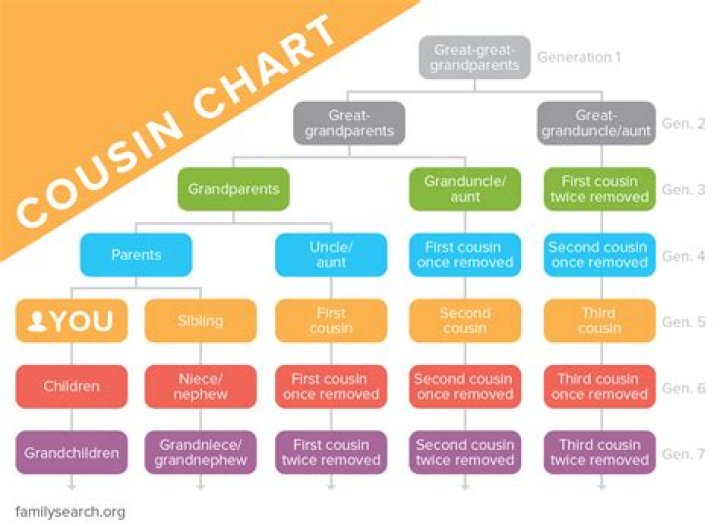
When exploring family trees and genealogical connections, the term "2nd cousin" often arises, but many people are unsure of what it actually means. Understanding the concept of a 2nd cousin is crucial for anyone interested in tracing their family history or learning about their extended family. Whether you're diving into your ancestry or simply curious about how family relationships work, this article will break it down step by step.
A 2nd cousin is a term used to describe a specific type of familial relationship. It refers to individuals who share a common great-grandparent but are not part of the same immediate family. This relationship is often misunderstood because it involves multiple generations, making it more complex than immediate family ties. By the end of this article, you'll have a clear understanding of what it means to be a 2nd cousin and how this relationship fits into the broader family structure.
Family relationships are not only important for personal curiosity but also for cultural and historical reasons. Learning about your 2nd cousins can provide insights into your ancestry and help connect you with distant relatives. This knowledge can also be valuable for legal and medical purposes, as understanding your extended family can reveal shared traits and histories. Let's dive deeper into the world of family connections and explore what being a 2nd cousin truly means.
Defining 2nd Cousins
A 2nd cousin is someone with whom you share a common great-grandparent but not a grandparent. To put it simply, your 2nd cousin is the child of your parent's 1st cousin. This relationship exists across three generations, making it a bit more complex than immediate family ties. Understanding this relationship requires a clear grasp of family trees and how different generations interact.
Key Characteristics of 2nd Cousins
Here are some key points to remember about 2nd cousins:
- They share a great-grandparent with you.
- They are not part of your immediate family.
- They are one generation further removed from the shared ancestor than your 1st cousin.
Understanding the nuances of 2nd cousin relationships can help you better navigate your family tree and make connections with distant relatives.
Family Tree Basics
To fully comprehend what a 2nd cousin is, it's essential to have a solid understanding of family trees. A family tree is a visual representation of your lineage, showing how different family members are related to one another. It typically starts with you and branches out to include parents, grandparents, siblings, and other relatives.
When mapping out a family tree, it's important to identify the shared ancestors that connect you to your 2nd cousins. These shared ancestors are usually great-grandparents, and understanding their role in the family structure is crucial for defining relationships.
Steps to Build a Family Tree
- Start with yourself and your immediate family.
- Add your parents and their siblings.
- Include your grandparents and their siblings.
- Finally, add your great-grandparents and their children.
By following these steps, you can create a comprehensive family tree that highlights your 2nd cousin relationships.
How 2nd Cousins Are Related
The relationship between 2nd cousins is rooted in shared ancestry. Both you and your 2nd cousin have a common great-grandparent, but you do not share the same grandparents. This means that your 2nd cousin is one generation further removed from the shared ancestor than your 1st cousin.
For example, if your great-grandparent had two children (your grandparent and their sibling), and each of those children had their own children (your parent and their cousin), then the children of those cousins would be your 2nd cousins.
Visualizing the Connection
A visual representation of this relationship can be helpful. Imagine a family tree where:
- You and your 2nd cousin both have the same great-grandparent.
- Your grandparent is a sibling to their grandparent.
- Your parent is a cousin to their parent.
This hierarchy of relationships makes it clear how 2nd cousins are connected through shared ancestry.
Distinguishing Between 1st and 2nd Cousins
One of the most common points of confusion when discussing cousins is the difference between 1st and 2nd cousins. While both types of cousins share a common ancestor, the level of connection varies.
A 1st cousin is someone with whom you share a grandparent. This means that your parents are siblings, making your connection much closer than with a 2nd cousin. In contrast, a 2nd cousin is someone with whom you share a great-grandparent, meaning the connection is more distant.
Key Differences
- 1st cousins share grandparents, while 2nd cousins share great-grandparents.
- 1st cousins are one generation removed from the shared ancestor, while 2nd cousins are two generations removed.
Understanding these distinctions can help clarify family relationships and make it easier to identify your 2nd cousins.
Understanding Generational Gaps
Generational gaps play a significant role in defining cousin relationships. The further removed you are from a shared ancestor, the more distant the relationship becomes. This is why 2nd cousins are considered more distant than 1st cousins.
For example, if your great-grandparent had children at different times, there could be a significant age difference between you and your 2nd cousin. This generational gap can sometimes make it difficult to identify 2nd cousins, especially if family records are incomplete or unclear.
Managing Generational Differences
Here are some tips for managing generational gaps in your family tree:
- Use birth records and other documentation to establish accurate timelines.
- Interview older family members to gather information about distant relatives.
- Utilize genealogical tools and databases to fill in missing information.
By addressing generational gaps, you can create a more accurate and comprehensive family tree.
What Are "Removed" Cousins?
In addition to 1st and 2nd cousins, there are also "removed" cousins. These are cousins who are not in the same generation as you. For example, your parent's 1st cousin is your 1st cousin once removed, and your grandparent's 1st cousin is your 1st cousin twice removed.
Similarly, your 2nd cousin once removed is the child of your 2nd cousin, while your 2nd cousin twice removed is the grandchild of your 2nd cousin. Understanding these distinctions can help you better navigate your extended family.
Clarifying "Removed" Relationships
- Once removed means one generation difference.
- Twice removed means two generations difference.
By understanding the concept of "removed" cousins, you can more accurately describe your relationships with distant relatives.
Cultural Significance of 2nd Cousins
In many cultures, understanding family relationships is an important part of maintaining family ties and preserving traditions. Knowing who your 2nd cousins are can help you connect with distant relatives and learn more about your ancestry.
For example, in some cultures, extended family members play a significant role in daily life and decision-making. Understanding your 2nd cousin relationships can help you build stronger connections with these relatives and maintain cultural traditions.
Cultural Practices Involving Cousins
- Family reunions often include 2nd cousins and other extended family members.
- In some cultures, 2nd cousins may have specific roles or responsibilities within the family.
By recognizing the cultural significance of 2nd cousin relationships, you can better appreciate the importance of extended family in different societies.
Genealogical Tools for Finding 2nd Cousins
With the rise of genealogical tools and DNA testing, finding your 2nd cousins has never been easier. Websites like Ancestry.com and 23andMe offer extensive databases and tools to help you trace your family tree and identify distant relatives.
These tools use a combination of historical records and DNA analysis to provide detailed information about your ancestry. By uploading your DNA sample and connecting with other users, you can discover new relatives, including 2nd cousins, and learn more about your family history.
Popular Genealogical Tools
- Ancestry.com
- 23andMe
- FamilySearch.org
By utilizing these tools, you can expand your understanding of your family tree and connect with distant relatives you may not have known existed.
Medical Implications of 2nd Cousin Relationships
Understanding your 2nd cousin relationships can also have important medical implications. Shared ancestry can mean shared genetic traits, which can be relevant for medical purposes. Knowing your 2nd cousins can help you identify potential health risks and take preventive measures.
For example, if a medical condition runs in your family, knowing your 2nd cousins can help you determine whether you or your children are at risk. This information can be invaluable for making informed healthcare decisions.
Genetic Counseling and Testing
- Genetic counseling can help you understand the risks associated with shared ancestry.
- Genetic testing can identify specific genetic markers that may be present in your family.
By exploring the medical implications of 2nd cousin relationships, you can take steps to protect your health and the health of your family.
Conclusion
In conclusion, understanding what a 2nd cousin is and how this relationship fits into your family tree is essential for anyone interested in genealogy or family history. By exploring the nuances of 2nd cousin relationships, you can better connect with distant relatives and learn more about your ancestry.
We encourage you to take action by building your family tree, using genealogical tools, and reaching out to your 2nd cousins. Share this article with friends and family to help them learn more about their own extended families. Together, we can preserve our family histories and strengthen our connections with distant relatives.


