
What is a 5150 Hold: Understanding the Mental Health Involuntary Hold
By Andrew Thornton
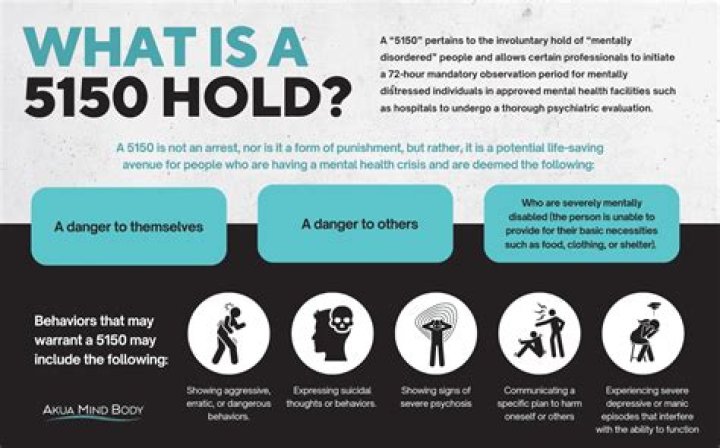
Understanding what a 5150 hold is crucial for anyone dealing with mental health crises or working in the healthcare field. This legal mechanism, derived from the California Welfare and Institutions Code, allows individuals to be involuntarily detained for mental health evaluation and treatment. It plays a vital role in ensuring the safety of individuals and the community.
In today's world, mental health awareness is growing, and understanding the legal frameworks surrounding mental health care is more important than ever. A 5150 hold is one such mechanism that provides critical support during times of crisis. This article will delve into the specifics of what a 5150 hold entails, its implications, and the process involved.
Whether you're a healthcare professional, a family member, or someone simply interested in learning more about mental health laws, this article will provide you with comprehensive insights into the 5150 hold process. By the end, you'll have a clearer understanding of how this system works and its significance in mental health care.
What is a 5150 Hold?
A 5150 hold refers to a section of the California Welfare and Institutions Code that allows for the involuntary detention of an individual for up to 72 hours for evaluation and treatment. This hold is specifically designed for individuals who are deemed to pose a danger to themselves, others, or are gravely disabled due to a mental health condition. The mechanism is a critical tool in mental health care, ensuring that those in crisis receive immediate attention.
Originating from the Lanterman-Petris-Short Act (LPS), the 5150 hold is part of a broader legal framework aimed at protecting individuals and the community. It is typically initiated by law enforcement officers or designated mental health professionals who have reasonable cause to believe that an individual meets the criteria for involuntary detention.
Who Can Initiate a 5150 Hold?
- Law enforcement officers
- Designated mental health professionals
- Certain healthcare providers
It is essential to note that the decision to place someone on a 5150 hold is not taken lightly and involves a thorough evaluation of the individual's condition and circumstances.
Legal Framework of the 5150 Hold
The legal framework surrounding the 5150 hold is rooted in the Lanterman-Petris-Short Act, enacted in 1967. This act was designed to reform mental health laws in California, focusing on the rights of individuals while ensuring public safety. The 5150 hold is one of the provisions within this act that allows for involuntary detention under specific circumstances.
Key Provisions of the Lanterman-Petris-Short Act
- Emphasis on voluntary treatment whenever possible
- Protection of individual rights and dignity
- Provisions for involuntary holds in cases of imminent danger
Understanding the legal context of the 5150 hold is crucial for both healthcare professionals and the general public. It highlights the balance between providing necessary care and respecting individual freedoms.
Criteria for a 5150 Hold
For a 5150 hold to be initiated, specific criteria must be met. These criteria ensure that the hold is used appropriately and only in cases where it is absolutely necessary. The primary conditions for a 5150 hold include:
- Posing a danger to oneself
- Posing a danger to others
- Being gravely disabled due to a mental health condition
Each of these criteria requires a detailed evaluation by qualified professionals to determine the validity of the hold. The process involves careful consideration of the individual's behavior, mental state, and immediate circumstances.
Evaluating the Criteria
Evaluations are conducted by trained mental health professionals who assess the individual's condition based on observable behaviors and reported incidents. This ensures that the decision to place someone on a 5150 hold is both justified and appropriate.
Process of a 5150 Hold
The process of implementing a 5150 hold involves several steps, each designed to ensure the safety and well-being of the individual in question. Once initiated, the hold allows for up to 72 hours of involuntary detention for evaluation and treatment.
Steps in the Process
- Assessment by law enforcement or mental health professionals
- Transportation to a designated treatment facility
- Evaluation by medical staff
- Development of a treatment plan
During this time, the individual receives comprehensive care and evaluation to determine the best course of action moving forward. The process is designed to be as humane and respectful as possible, focusing on the individual's needs and rights.
Rights of Individuals Under 5150 Hold
Despite being under an involuntary hold, individuals retain certain rights that protect their dignity and autonomy. These rights are an integral part of the legal framework surrounding the 5150 hold and are designed to ensure fair treatment.
- Right to a hearing if the hold extends beyond 72 hours
- Right to legal representation
- Right to communicate with family and legal counsel
Understanding these rights is crucial for both the individuals involved and those working within the mental health care system. It reinforces the importance of respecting individual freedoms even in cases of involuntary detention.
Common Misconceptions About 5150 Holds
There are several misconceptions surrounding the 5150 hold that can lead to misunderstandings about its purpose and application. Addressing these misconceptions is essential for fostering a more informed public discourse about mental health care.
Key Misconceptions
- Belief that a 5150 hold is a punitive measure
- Misunderstanding about the duration and scope of the hold
- Assumption that it can be used for any mental health issue
Clarifying these misconceptions helps to promote a more accurate understanding of the 5150 hold and its role in mental health care.
Alternatives to a 5150 Hold
While the 5150 hold is a critical tool in mental health care, there are alternatives that can be considered depending on the situation. These alternatives aim to provide support and treatment while respecting individual autonomy.
Possible Alternatives
- Voluntary admission to a treatment facility
- Outpatient treatment programs
- Crisis intervention and support services
Exploring these alternatives can lead to more personalized and effective treatment plans for individuals in need.
Impact on Mental Health Care
The implementation of the 5150 hold has had a significant impact on the field of mental health care. It highlights the importance of early intervention and comprehensive evaluation in addressing mental health crises. However, it also raises important questions about the balance between public safety and individual rights.
As mental health awareness continues to grow, the role of mechanisms like the 5150 hold in providing critical support becomes increasingly important. It underscores the need for continued education and advocacy in mental health care.
Statistics and Data on 5150 Holds
Data on the use of 5150 holds provides valuable insights into their prevalence and effectiveness. According to recent statistics, the number of 5150 holds has been increasing, reflecting a growing awareness and utilization of mental health services.
Studies indicate that the majority of individuals placed on a 5150 hold receive necessary treatment and support, highlighting the importance of this mechanism in mental health care. These statistics are crucial for informing policy and practice in the field.
Conclusion and Next Steps
In conclusion, understanding what a 5150 hold is and its implications is vital for anyone involved in mental health care. This mechanism plays a crucial role in ensuring the safety and well-being of individuals in crisis. By addressing misconceptions, exploring alternatives, and utilizing data-driven insights, we can continue to improve mental health care practices.
We invite you to share your thoughts and experiences in the comments below. Engaging in discussions about mental health care is an essential step towards creating a more informed and supportive community. For further reading, explore our other articles on mental health and related topics.


