
What is the Difference Between Opossum and Possum? A Comprehensive Guide
By Michael King
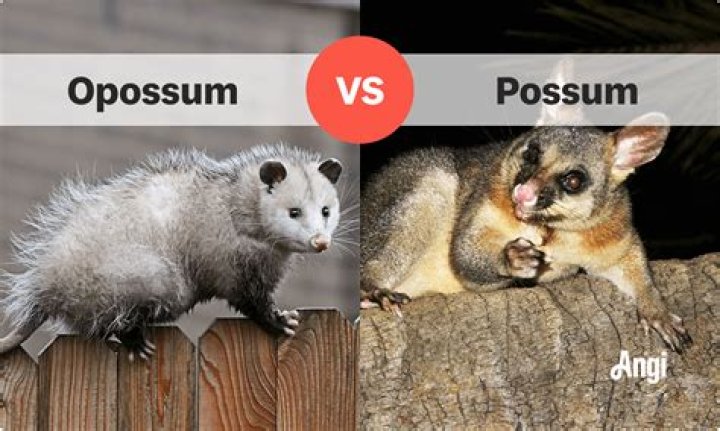
Have you ever wondered what the difference is between an opossum and a possum? While their names sound similar, these creatures belong to entirely different animal families with distinct characteristics. Understanding the distinction can help clarify misconceptions about these fascinating animals.
Many people use the terms "opossum" and "possum" interchangeably, but they are not the same. The confusion often arises due to their similar appearance and names. This article will delve into the differences between opossums and possums, providing valuable insights that will make it easier for you to differentiate between them.
Whether you're a wildlife enthusiast or simply curious about these creatures, this guide will equip you with detailed information about their habitats, behaviors, physical traits, and evolutionary backgrounds. Let's explore the world of opossums and possums!
Biological Classification: Opossum vs Possum
The primary difference between opossums and possums lies in their biological classification. Opossums belong to the order Didelphimorphia and are native to the Americas, while possums belong to the order Diprotodontia and are found primarily in Australia and nearby regions.
Taxonomy of Opossums
Opossums are marsupials that fall under the family Didelphidae. They are part of the Didelphimorphia order, which includes over 100 species. The most well-known species is the Virginia opossum (Didelphis virginiana), commonly found in North America.
Taxonomy of Possums
Possums, on the other hand, belong to the family Phalangeridae within the order Diprotodontia. This order includes a variety of marsupials such as kangaroos and wallabies. Possums are native to Australia, New Guinea, and nearby islands.
Physical Characteristics of Opossums and Possums
One of the key distinctions between opossums and possums is their physical appearance. While both animals have fur and prehensile tails, their features differ significantly.
Opossum Physical Traits
Opossums typically have gray or white fur, pointed snouts, and hairless tails. They are medium-sized mammals with a body length ranging from 13 to 37 inches, including their tail. Their ears are hairless and rounded.
Possum Physical Traits
Possums, in contrast, have thick, soft fur that varies in color from gray to brown or even black. Their tails are also prehensile but differ in texture compared to opossums. Possums are generally larger than opossums, with some species reaching up to 35 inches in length.
Habitat and Distribution
The habitats of opossums and possums reflect their geographical origins and adaptations.
Opossum Habitat
Opossums thrive in a variety of environments, including forests, grasslands, and urban areas. They are highly adaptable and can be found throughout North, Central, and South America. The Virginia opossum, in particular, is common in the United States and Canada.
Possum Habitat
Possums inhabit forests, woodlands, and suburban areas in Australia and nearby regions. They are arboreal creatures, meaning they spend much of their time in trees. Some species, like the common brushtail possum, are known for their ability to adapt to urban environments.
Diet and Feeding Habits
The dietary preferences of opossums and possums highlight their ecological roles.
Opossum Diet
Opossums are omnivorous and opportunistic feeders. Their diet includes insects, small mammals, fruits, and carrion. This versatility allows them to survive in diverse ecosystems.
Possum Diet
Possums are primarily herbivorous, feeding on leaves, fruits, and flowers. However, some species may occasionally consume insects or other small animals. Their diet varies depending on the species and habitat.
Reproductive Behavior
Reproduction in opossums and possums showcases the unique adaptations of marsupials.
Opossum Reproduction
Opossums have a short gestation period of about 12 to 13 days. After birth, the underdeveloped young, called joeys, crawl into the mother's pouch to continue developing. A single litter can consist of up to 20 joeys, although not all survive.
Possum Reproduction
Possums also give birth to underdeveloped young, which continue to grow in the mother's pouch. The gestation period for possums is slightly longer, around 16 to 18 days. Possums typically have smaller litters compared to opossums, with an average of two to four joeys.
Evolutionary Background
The evolutionary history of opossums and possums reveals fascinating insights into their development.
Opossum Evolution
Opossums are considered one of the oldest groups of marsupials, with fossil records dating back over 65 million years. They have remained relatively unchanged over millennia, showcasing their adaptability and survival skills.
Possum Evolution
Possums evolved in Australia and are part of the Diprotodontia order, which includes some of the most iconic marsupials. Their evolution is closely tied to the continent's unique ecological conditions, leading to diverse species adapted to various environments.
Common Misconceptions About Opossums and Possums
There are several misconceptions surrounding these animals that need clarification.
- Opossums and possums are not the same species.
- Opossums are not carriers of rabies, despite their reputation for playing dead.
- Possums are not rodents; they are marsupials.
Conservation Status
The conservation status of opossums and possums varies depending on the species.
Opossum Conservation
Opossum populations are generally stable, and they are not considered endangered. However, habitat loss and roadkill pose threats to their survival in certain areas.
Possum Conservation
Some possum species, such as the mountain pygmy possum, are classified as endangered due to habitat destruction and climate change. Conservation efforts are ongoing to protect these vulnerable species.
Interesting Facts About Opossums and Possums
Here are some intriguing facts about these fascinating creatures:
- Opossums can "play dead" as a defense mechanism, a behavior known as thanatosis.
- Possums have opposable thumbs on their hind feet, allowing them to grip branches effectively.
- Both opossums and possums are nocturnal, meaning they are active during the night.
Conclusion
In summary, the difference between opossums and possums is rooted in their biological classification, physical characteristics, habitats, and evolutionary backgrounds. While both animals are marsupials, they belong to separate orders and inhabit distinct regions.
We encourage you to share this article with others who may find it interesting. If you have any questions or comments, feel free to leave them below. For more information on wildlife and nature, explore our other articles on the site!
Data Source: National Geographic, Wildlife Conservation Society, Australian Museum.


